
Please find below the proof read transcript of Episode 5;
Muhammad Mustafa – 0:08
Welcome to season two episode five of the red star podcast.
Muhammad Mustafa – 0:12
In this episode, we are honored to be joined by Paul Dobson, a distinguished journalist based in Venezuela.
Muhammad Mustafa – 0:18
Together, we delve into the politics of Venezuela and Latin America with a particular focus on experiences and the struggles of the working class people.
Muhammad Mustafa – 0:27
Our distinguished host, Ben Stevenson, will guide us through an in-depth discussion, shedding light on this critical and complex topic.
Muhammad Mustafa – 0:36
Stay with us and enjoy this enriching session filled with valuable insight and knowledge.
Ben Stevenson – 0:42
If we start with the fact that it’s been now more than fifteen years since I visited Venezuela, and what a privilege and really great experience that was, which we can talk about.
Ben Stevenson – 1:01
But you’ve been living in Venezuela now for just over twenty years.
Ben Stevenson – 1:07
So, I mean, what I suppose, how would you summarize your experience of what you’ve seen?
Ben Stevenson – 1:13
Because if we if we’re just to sort of cast our minds back, most, I suppose, British audiences will be aware of Venezuela from really 02/2003 onwards with the coup.
Ben Stevenson – 1:28
You know, what what was it like coming over to Venezuela around that time?
Paul Dobson – 1:33
Yeah.
Paul Dobson – 1:34
So the Venezuela that that most of your audience or most of your listeners will be aware of is is a Venezuela which really came to the public attention during the the the first, second, and third Chavez governments.
Paul Dobson – 1:49
So around February up until 02/2010, more or less, and then, of course, leading up to Chavez’s death, in 02/2012.
Paul Dobson – 2:00
And this was this was a period of great economic growth for Venezuela.
Paul Dobson – 2:05
It was a period of great, redistribution of the social wealth in the country, which also had a huge impact on a range of of areas, health care, education, a whole range of other sectors as well.
Paul Dobson – 2:21
And around 02/2006, ‘2 thousand and ‘7 is when we saw Chavez first really talk about connecting this redistribution of the oil wealth, which in itself was was new to the country.
Paul Dobson – 2:34
He’s he then started connecting this to something a bit more structural, and he started using the word socialism.
Paul Dobson – 2:40
He started talking about, the bourgeoisie.
Paul Dobson – 2:43
He started about started talking about popular power.
Paul Dobson – 2:46
And this is when we first saw, essentially, his government look to build, the conditions to create socialism.
Paul Dobson – 2:57
The the extent to which you’re successful in this or not is is a different question and maybe somebody who can debate later.
Paul Dobson – 3:02
But but this this is definitely his his his intent.
Paul Dobson – 3:08
When he passed away and the new government came in in February and 02/2013, the Nicolas Maduro first government, things really shifted.
Paul Dobson – 3:18
Mhmm.
Paul Dobson – 3:20
And today and and I’m sure we will go into this a little bit later in today’s podcast, the period 02/2013 to today.
Paul Dobson – 3:28
But today, if we look at today’s Venezuela, it doesn’t have a shadow of of what it had under Chavez period.
Paul Dobson – 3:37
Today, we can say that the the capitalist economy, which Chavez never really got rid of
Paul Dobson – 3:37
Mhmm.
Paul Dobson – 3:43
Going beyond his his political rhetoric about, you know, using the big s word here and there and everywhere.
Ben Stevenson – 3:43
Mhmm.
Paul Dobson – 3:49
But the structure of the economy, he didn’t really change.
Paul Dobson – 3:52
No?
Paul Dobson – 3:53
He he made it a little bit more humanized.
Paul Dobson – 3:55
Yes.
Paul Dobson – 3:56
But he didn’t change it.
Paul Dobson – 3:57
But the capitalist economy, which has continued to exist since, two thou the turn of the century, essentially, is now hugely dominant, much more savage, and there is no, instances or even seedlings left of what Chavez was trying to do in terms of build socialism.
Paul Dobson – 4:18
You know?
Paul Dobson – 4:19
Obviously, you’re not socialism is not something you you decree.
Paul Dobson – 4:22
It has to be built.
Paul Dobson – 4:23
And the the current state of Venezuela is a million miles from both where Chavez had it at the point of his death and where he wanted to to take it.
Paul Dobson – 4:35
Mhmm.
Paul Dobson – 4:36
And this, of course, has had a huge impact on people’s lives, has had a huge impact on the socialist movement in Venezuela, which has been really dismantled to some extent.
Paul Dobson – 4:46
And we’ve really seen an offensive by the bosses, an offensive by the capitalists, an offensive by the neoliberal elements with huge success.
Ben Stevenson – 4:55
Reflecting on that kind of society, I mean, as you say, Chavez, certainly, when I visited Venezuela, it was very much you know, I got to see the mission, Miraculous, and, you know, where they were taking, glaucoma patients from Venezuela over to Cuba.
Ben Stevenson – 5:19
And, you know, they were operating on them the next day and flying them back with complete eyesight.
Ben Stevenson – 5:27
And it was, like, you know, quite inspirational to see that kind of practical elements of solidarity.
Ben Stevenson – 5:34
But do you still see those kinds of things now?
Paul Dobson – 5:38
No, Ben.
Paul Dobson – 5:38
All all of these programs have been completely rolled back.
Paul Dobson – 5:42
This has been part of the government agenda, especially since 02/2017, ‘2 thousand and ’18 when they rolled out a a macroeconomic policy plan, which essentially, amongst other things, eliminated all of the subsidies, the government programs, and so on.
Paul Dobson – 6:01
And this, again, has had a real impact on on your everyday working Venezuelan’s lives.
Paul Dobson – 6:08
Another example will be, for example, the the the state subsidies.
Paul Dobson – 6:12
Previously, we have state subsidized, fuel, health care, education, food, and so all of these subsidies have been eliminated today.
Paul Dobson – 6:23
And in fact, the government are now backing the the dollarization of the economy.
Paul Dobson – 6:27
It’s estimated that over 80% of Venezuelan goods on the shelves are marked up in US dollars right now, and this is essentially with the government backing.
Paul Dobson – 6:35
So you can see the sort of turnaround that we’ve seen here from a government which used the oil wealth to help people, see again, amongst other examples, of course, through these these social missions
Ben Stevenson – 6:48
Yeah.
Paul Dobson – 6:48
And to what we have now, essentially, which is a government which is backing people, charging for their goods in in a foreign currency, in a US, currency.
Paul Dobson – 6:58
So a real turnaround here.
Paul Dobson – 7:00
And it’s this is this is extremely sad to see.
Paul Dobson – 7:03
It’s extremely devastating to see in many of the poorer communities who really depended on these social missions, for their minimum quality of life.
Ben Stevenson – 7:13
I mean, we can under you know, we can underestimate the importance of those programs, can’t we?
Ben Stevenson – 7:19
I mean, we’ve seen it here in Britain with austerity, measures.
Ben Stevenson – 7:24
Even just something as small as potholes on the streets.
Ben Stevenson – 7:24
You know?
Ben Stevenson – 7:29
You know?
Ben Stevenson – 7:29
It can be clear indication to people that there is something not in Denmark, so to speak, that there is a a denigration and a a degradation of the state, that’s taking place.
Ben Stevenson – 7:46
And that has been very much driven by, in Britain, our own ruling class, you know, that austerity agenda.
Ben Stevenson – 7:55
I mean, who is it that’s driving the agenda in Venezuela?
Paul Dobson – 8:01
Without a doubt, it’s the rich.
Paul Dobson – 8:03
Without a doubt.
Paul Dobson – 8:05
We have seen a an influx over the last again, since around 02/2018.
Paul Dobson – 8:10
Before this, we saw murmurs of this, but this was a real turning point in Venezuela’s economy, essentially.
Paul Dobson – 8:16
But now we can say without a doubt that the the large bourgeois sectors, the rich, essentially, have very successfully taken control of the ruling party.
Paul Dobson – 8:27
So the ruling party in Venezuela, the PSUV, since its, inception in 02/2005, have been a what many here describe as a multi class party.
Paul Dobson – 8:37
So, basically, an amalgamation of different groups.
Paul Dobson – 8:40
So here you have peasant groups.
Paul Dobson – 8:41
You know, we so we have large business sectors, but we also have organized trade unionists.
Paul Dobson – 8:45
So a real mix of people.
Paul Dobson – 8:47
And there’s always been an internal battle to dominate the party to some extent as well.
Paul Dobson – 8:53
I’ve seen some parallels drawn with the Labour Party.
Paul Dobson – 8:55
I don’t wanna go into that.
Paul Dobson – 8:57
I’m no no expert, but there’s definitely a an internal battle there.
Paul Dobson – 9:01
There always has been.
Paul Dobson – 9:02
And under the Chavez years, we could very clearly see that the popular sectors, so the working sectors, the working and the peasant sectors, were the dominant trends in making party line within the ruling PSUV.
Paul Dobson – 9:15
And this was clear, and this was reflected in the part in the the government policy.
Paul Dobson – 9:20
Now it is very, very clear that the large landowners and the large business owners are in control.
Paul Dobson – 9:27
There was an essential internal coup.
Ben Stevenson – 9:27
Mhmm.
Paul Dobson – 9:30
The balance of forces within the governing party changed, and and this has been one of the major factors that has led us to where we are now.
Paul Dobson – 9:38
For example, one of the recent government appointments was the a new in a new industries minister.
Paul Dobson – 9:45
And this new industries minister, firstly, he’s not even Venezuelan.
Paul Dobson – 9:48
He’s Colombian, which is against the Venezuelan rule and constitution, but they seem to overlook this fact.
Paul Dobson – 9:54
But he’s a a Colombian oligarch who was very closely related to Alvaro Uribe, the former president of Colombia, the very far right president.
Paul Dobson – 10:04
He has a mansion in one part of Colombia, which is valued at around $5,000,000,000.
Paul Dobson – 10:09
Yeah.
Paul Dobson – 10:09
So these are the sort of sectors which are now in Venezuelan government.
Paul Dobson – 10:13
And, of course, the the poor people, the working class people, the peasant sectors have been completely shifted out of all of the policy making mechanisms.
Paul Dobson – 10:24
And, again, this is reflected in the current government policy.
Paul Dobson – 10:28
It’s currently estimated according to the the Gini coefficient, which kind of estimates, you know, the the gap between the richest and the poorest, that the the richest in Venezuela today earns 70% more sorry.
Paul Dobson – 10:42
It’s earned 70 times more that of the poorest sector.
Paul Dobson – 10:45
Mhmm.
Paul Dobson – 10:46
And so the Gini coefficient has shot up over the last, few years in Venezuela, really reflecting that the this wealth gap has grown quite significantly.
Ben Stevenson – 10:56
Well, absolutely.
Ben Stevenson – 10:58
Although, I don’t think you’re quite as bad as we are at the moment because I think I think the, the I I I think when we were when we last had, sort of around 60 or 70 times the CEO versus, average wage, gap, which is how we sort of calculate it, that was, 1968.
Ben Stevenson – 11:20
And I think it’s about 500 to one, now in The UK.
Ben Stevenson – 11:24
But that that’s perhaps, you know, obviously, a a reflection of of of, where where you’re going and where or or or sort of where are you coming from.
Ben Stevenson – 11:33
The reason why I mentioned South Africa in particular and the and the ANC is that it did put me in mind of something that the ANC well, many comrades, in South Africa who were both inside the ANC and outside of the ANC, would talk about, was this element of ton tendrepreneurship, as they would call it.
Ben Stevenson – 11:58
That there were you know, with the state becoming a significant actor in the economy, that there were these entrepreneurs who became attached to state projects and then grew their portfolio in a sense, and became, in many ways, the new oligarchy, through things like the Black Economic Empowerment Act where, you know, despite, attempts and notions of redistribution of wealth and power, what’s actually happened is that the, just the the the constitution of the bourgeoisie has changed.
Paul Dobson – 12:39
But here here here in Venezuela, Ben, this this concept has a name as well.
Paul Dobson – 12:43
And this name, went viral essentially.
Paul Dobson – 12:47
I think it was around 02/2019.
Paul Dobson – 12:49
The government first started to use it and and created great ridicule as well.
Paul Dobson – 12:54
We could say, in the sectors of the left, which have, you know, read a bit a little bit beyond the front pages of the newspapers, you know, have actually read a little bit in their lives.
Paul Dobson – 13:04
And and the government called this these new sectors very proudly, I have to say.
Paul Dobson – 13:08
The government called these new sectors a revolutionary bourgeoisie.
Paul Dobson – 13:13
Now when they talk about revolutionary bourgeoisie, they’re not making some reference to the the the the Paris Commune or the power of the French Revolution or, you know, the revolutionary character of the bourgeoisie and overthrowing the feudal, state apparatus.
Paul Dobson – 13:26
No.
Paul Dobson – 13:26
No.
Paul Dobson – 13:27
They’re talking about essentially the this entrepreneurship, the the business sectors, which are linked to what they call, revolutionary party or revolutionary government.
Paul Dobson – 13:37
Essentially, people who are who are connected to the government, who are making a pretty packet, and are now being put into ministerial posts.
Ben Stevenson – 13:44
Yeah.
Ben Stevenson – 13:45
I I suppose I mean, you do get a lot of problems, don’t you?
Ben Stevenson – 13:50
I mean, you get a lot of problems in developing countries, whatever the orientation, but, you get a lot of problems with well, you get a lot of problems in capitalist countries with corruption in many ways.
Ben Stevenson – 14:04
And, you know, whether or not people view it as corruption, I think, many of us, you know, would draw a comparison, for example, to, the way in which Tory donors got VIP access to PPE contracts during the pandemic in The UK.
Ben Stevenson – 14:26
You know?
Ben Stevenson – 14:27
So that parasitism is something that the bourgeoisie, of every country shares in many ways.
Paul Dobson – 14:38
Although here, it’s a little bit more, on steroids, essentially.
Paul Dobson – 14:43
When there’s oil involved, everything is exaggerated.
Paul Dobson – 14:46
No?
Paul Dobson – 14:48
Only this year, Ben, in in April March or April, a now former government minister, who was one of the vice presidents of the ruling PSEV party, was finally announced as being corrupt.
Paul Dobson – 15:07
The whole country has known he has been corrupt for many, many years.
Paul Dobson – 15:11
And finally, the government recognized that maybe he is corrupt.
Paul Dobson – 15:14
A guy called Tarek Elai Sami, who was the head of the Venezuelan oil industry for many years, a big player in in the PSV party itself.
Paul Dobson – 15:25
Essentially, according to the government itself, he stole $23,000,000,000 over the last couple of years from the Venezuelan oil industry.
Paul Dobson – 15:36
Now I bring this up not just to point out that the corruption here is is unprecedented and and blatant, but to point out a little bit the reaction of the government to this.
Paul Dobson – 15:47
Tariq Alai Sami was not arrested.
Paul Dobson – 15:50
Tariq Al Asami, despite everyone knowing he was corrupt, the fact the government recognizing him as being corrupt, putting a a figure on his corruption.
Paul Dobson – 16:00
He was not arrested for many months.
Paul Dobson – 16:02
The government let him be.
Paul Dobson – 16:04
He was finally because, we entered a electoral campaign a campaigning period.
Paul Dobson – 16:09
He was, eventually detained by the police and is now in his house.
Paul Dobson – 16:12
He is on house arrest.
Paul Dobson – 16:15
So, essentially, he’s never been put to trial.
Paul Dobson – 16:17
He’s not in prison.
Paul Dobson – 16:18
We don’t know what happened to the 23,000,000,000 that he stole.
Paul Dobson – 16:21
He’s probably still stealing.
Paul Dobson – 16:23
And this came at a time when the Venezuelan GDP, the the Venezuelan economy had shrunk by over 80% in the last ten years.
Paul Dobson – 16:35
So this came at a time when workers were earning $3 a month and are still earning $3 a month.
Paul Dobson – 16:40
That’s what about £2.50 a month.
Paul Dobson – 16:43
And the government, in response to the large scale protests from the trade unions to demand higher wages, the government have the balls to come out and say, you know, there’s there’s no budget.
Paul Dobson – 16:54
We have no money because of sanctions and the blockade.
Paul Dobson – 16:58
And then the next day, it turns out that one of their people stole $23,000,000,000.
Paul Dobson – 17:03
And this really shows a lot of the contradictions we’re seeing in Venezuelan society today.
Ben Stevenson – 17:09
You mentioned sanctions.
Ben Stevenson – 17:11
I mean, obviously, that certainly, that political threat from The US was very, very live when I visited Venezuela.
Ben Stevenson – 17:23
That notion that The US had already interfered and would was continuing to interfere in Venezuelan political affairs.
Ben Stevenson – 17:35
To what extent is that still the case?
Paul Dobson – 17:37
Well, this is a an issue of great debate in Venezuela.
Paul Dobson – 17:41
If you had asked me this question in 02/2019, ‘2 thousand and ’20, maybe even 02/2021, my answer would have been that it was very clear and very blatant, the impact of the sanctions on on Venezuelan life in general, the economy, but their life in general, was noticeable on the streets day in, day out, and, of course, on the economy, much more so.
Paul Dobson – 18:09
Today, however, we have seen certain shifts in this area of political economy, which have led many to come to the conclusion, let’s say, that the impact of the sanctions, which continue to be illegal, continue to be criminal, and must continue to be denounced, from all sectors without a doubt.
Paul Dobson – 18:34
But the impact they currently have on the Venezuelan economy is much reduced to what it was a few years ago.
Paul Dobson – 18:41
Mhmm.
Paul Dobson – 18:41
Now, again, this is a big debate.
Paul Dobson – 18:43
I’m not necessarily reaffirming this point, but it’s an interesting point, and there is certain evidence to back it up.
Paul Dobson – 18:50
For example, just this year, so we’re talking just 2024 here, we could point to the fact that the Maduro presidential election campaign ran and paid for at a very expensive price, electoral campaigning materials to be shown on the big screen in Times Square in New York.
Paul Dobson – 19:12
Now how is this possible if the sanctions are being applied?
Paul Dobson – 19:16
I don’t really see how it would be possible.
Paul Dobson – 19:18
This is one slightly mundane example, but there are other more serious examples.
Paul Dobson – 19:22
This year, the Venezuelan National Assembly, fast tracked a bill which gave oil exploration rights to Chevron, the US multinational firm, not for this year, not for this decade, but until 2050, these rights have been guaranteed.
Paul Dobson – 19:40
So many are asking how is this possible if The US sanctions, if there’s a blockade, if we’re essentially in the same position as Cuba, and now let’s say Russia, where The US firms are not allowed to do anything with Venezuela.
Paul Dobson – 19:52
How is it possible that Chevron have been given, and not just by Venezuelan side, by The US authorities, by OFAC, or the the the the, basically, the the treasury department in charge of sanctions?
Paul Dobson – 20:04
They’ve been given a sanctions waiver until 2050 to extract Venezuelan oil.
Paul Dobson – 20:10
And that’s just this year.
Paul Dobson – 20:11
When we also add in that over the last twelve or fourteen months, the Venezuelan government signed massive, massive oil contracts, not with Chinese or Russian or Iranian or Indian oil corporations, not with the BRICS, not with the the so called the new hegemonic or multipolar.
Paul Dobson – 20:30
No.
Paul Dobson – 20:30
No.
Paul Dobson – 20:30
No.
Paul Dobson – 20:31
With Repsol, with ENI, with, again, with Chevron, with BP, with Western European and North American, large multinational oil corporations, the devil’s oil corporations.
Paul Dobson – 20:45
These have all signed huge oil contracts in Venezuela over the last fourteen months.
Paul Dobson – 20:50
So we look at this, and we compare it to the sanctions discourse, and we compare it to the reality, and we compare it to 02/2019 where, without a doubt, this would not have been possible, where in 02/2019, ‘2 thousand and ’20, these firms would’ve were denied rights to work in Venezuela by OFAC, even Chinese firms, Russian firms.
Paul Dobson – 21:11
We saw the the Russian large Russian, oil firms withdraw from Venezuela, in fact, after the the wave of sanctions in 02/2019 because the because of the threat of kickback essentially on their US based assets.
Paul Dobson – 21:26
Mhmm.
Paul Dobson – 21:27
But today, we’re seeing a complete reversal of this of this policy line.
Paul Dobson – 21:32
So people are looking at this.
Paul Dobson – 21:34
People are looking at the $23,000,000,000 stolen by one guy in the government.
Paul Dobson – 21:38
Who knows what all the other guys are stealing at the moment?
Paul Dobson – 21:41
And peep people here at least are saying, there’s not really much left of sanctions.
Paul Dobson – 21:46
There’s not really much, impact on on our daily lives when we see what’s happening here.
Paul Dobson – 21:51
And they look at the the prices marked in US dollars, and they say, maybe there’s sanctions discourse by the government, which at one time was very real and very severe, but maybe this is now being used by the government to justify something else.
Paul Dobson – 22:06
Maybe this is now the excuse the government needs to do whatever they want to do, to continue to steal, to try to rally forces behind them.
Paul Dobson – 22:15
But when we actually look at the content of the impact of US sanctions of Venezuela today today, November, December ’20 ’20 ‘4, the impact is severely reduced, Ben.
Ben Stevenson – 22:26
Well, it’s a bit like, how in the nineteen seventies, the Soviet Union essentially proclaimed communism.
Ben Stevenson – 22:34
Exactly.
Ben Stevenson – 22:34
Communist society.
Ben Stevenson – 22:36
Even though it wasn’t, it wouldn’t have
Paul Dobson – 22:38
But the the the reality the reality is that the, let’s say, progressive or revolutionary sector certainly seized political power, as he pointed out, in in 1999.
Paul Dobson – 22:49
However, today, more than obviously, maybe it’s easier with hindsight to say these things.
Paul Dobson – 22:55
But today, more than ever, we can see that, in fact, during the Chavez government, very few structural reforms were put in place in the economic system of the country.
Paul Dobson – 23:06
What we saw essentially was, and this is not to to to reduce its its impact or to take away from its impact in any way, shape, or form, but we essentially saw a better redistribution of Venezuela’s very high oil rent, with a massive impact on a very, very backward and poor population in terms of health care and education, whereby even as my the the smallest investment returned huge gains.
Paul Dobson – 23:34
So, obviously, a large oil based investment into these sectors produced stunning advance in very short periods of time, but it was essentially redistribution of of rent.
Paul Dobson – 23:46
What we didn’t see was genuine structural reforms, during the Chavez governments.
Paul Dobson – 23:46
Mhmm.
Paul Dobson – 23:52
What we did see as well was with huge indentment.
Paul Dobson – 23:55
It’s estimated that in the twenty years, from 1999 to 02/2018, so the the Chavez period and the first government of Nicolas Maduro, that foreign debt to Venezuela grew by 200% from 49,000,000,000 to a hundred and 54,000,000,000.
Paul Dobson – 24:11
So we’re seeing a a credit bubble being produced, which we’re now starting to pay the price of.
Paul Dobson – 24:18
We see social gains based on essentially high oil prices.
Paul Dobson – 24:23
The oil barrel for much of this period was above a hundred dollars.
Paul Dobson – 24:27
It then shot down and and is now well below that as well.
Paul Dobson – 24:31
So we saw, bubbles essentially of social growth.
Paul Dobson – 24:35
We didn’t see structural revolutionary socialist, economic models being put into place, which might have been able to withstand, the drop in oil prices, for example.
Ben Stevenson – 24:48
I think I mean, in a sense, what you’re talking about, I think if we were to draw a parallel, it sounds very like the social democratic model that exists in Scandinavia where a lot of that oil wealth has and a lot of it has been oil wealth, has been reinvested back into the population as a whole as part of redistributed methods, a strong vision of a state health education, and so on and so forth, social programs.
Ben Stevenson – 25:22
You know, I think both of us would draw a distinction between that and what we would say is transformative, you know, really revolutionary changes to the economy, which I suppose goes as much to ownership of, you know, factories, of capital, of wealth, of the drivers of the economy, rail, social infrastructure, logistics, so on and so forth.
Ben Stevenson – 26:02
To what extent is that still socially owned?
Paul Dobson – 26:09
Well, the this was, despite this general view of the carriers years, which I explained before, there were without doubt exceptions.
Paul Dobson – 26:17
There were elements of his policy, sometimes short lived, sometimes, watery, but there were enough elements that they give real hope to left wing revolutionaries that there was actually gonna be the birth of socialism in the country.
Paul Dobson – 26:31
And one of these was, one of these was the birth of of popular power in the country, so the communal councils, the communes, so which are now essentially all dead as a slightly large generalization.
Paul Dobson – 26:43
But you would struggle today in Venezuela to find, a communal council which is met, even once this year, for example, or a commune, maybe a handful of communes in the country, five or six which are currently functioning, but I mean, the rest of the country is dead.
Paul Dobson – 27:01
And the other element which gave a lot of hope to revolutionaries, myself included, was this, was Clarus’ efforts to take on sectors of the oligarchy, and nationalize key sectors of of the industries.
Paul Dobson – 27:16
And he did this essentially at risk of his own life because he was he was he was picking fights with some very powerful people.
Paul Dobson – 27:24
We saw this in the oil industry.
Paul Dobson – 27:25
We saw this in the mines.
Paul Dobson – 27:27
We saw this in the large land owning land owning sectors, in services, telephone, telecommunications, a whole range of sectors, essentially, important strategic sectors.
Paul Dobson – 27:39
And this was done with fairly significant success, we can say.
Paul Dobson – 27:45
There were problems, of course, many of the same problems we saw, for example, in revolutionary Cuba with respect to the training of middle, agent administrators for these industries, technicians, and so on, and a whole range of other factors.
Paul Dobson – 28:01
But but the policy from the top of the government was this.
Paul Dobson – 28:05
Today, Ben, where are we looking at this today?
Paul Dobson – 28:09
Only this week.
Paul Dobson – 28:11
We’re talking about, hey, the November more or less.
Paul Dobson – 28:14
There’s been a big scandal in the Venezuelan press because the one of the chambers of of industry in the country, so basically one of the the the groupings of the large industrialists held a press conference and said that they had come to an agreement with this government, this government which claims to be socialist revolutionary, anti imperialist rather than Lenin himself.
Paul Dobson – 28:36
They’d come to an agreement with their government to privatize 350 state industries.
Paul Dobson – 28:44
350 state industries, Ben.
Ben Stevenson – 28:48
Mhmm.
Paul Dobson – 28:48
And this isn’t the start.
Paul Dobson – 28:49
This is not this is rather the end of this policy.
Paul Dobson – 28:52
We’ve seen progressive privatization of all of these sectors which Chavez nationalized over the last five years, including the oil industry, which by name remains public, but is de facto prioritized through trickle down, breaking up of the industry, and then subcontracting out to private sectors.
Paul Dobson – 29:15
Healthcare is essentially privatized.
Paul Dobson – 29:18
There in Venezuela, public hospitals exist.
Paul Dobson – 29:21
But if you go to one, they give you a long list of medical in, instruments and medicines you need to buy because they have nothing there.
Paul Dobson – 29:29
So people end up going to the private clinics.
Paul Dobson – 29:32
So we’re seeing all of these industries being privatized, by the current government.
Paul Dobson – 29:38
We’re seeing this just recently, the wave of 350 firms, which are gonna be passed into private hands.
Paul Dobson – 29:46
And equally, again, very recently, just in November, another large scandal has erupted due to a a tweet from Gustavo Petro.
Paul Dobson – 29:56
Gustavo Petro, the the new president of Colombia, Progressive, let’s say, a a left reformist in in Colombia, who has been critical of of the current Venezuelan government.
Paul Dobson – 30:09
And he wrote a tweet, a couple of days ago, which really exploded on on social networks because no one was even aware that this was happening.
Paul Dobson – 30:21
And just to give you some background here, there is a Venezuelan state owned, factory, essentially, in Colombia, based in Colombia, called Monomeros.
Paul Dobson – 30:32
Monomeros is a fertilizer producer.
Paul Dobson – 30:35
It’s huge.
Paul Dobson – 30:36
It covers 40% of the Colombian fertilizer market.
Paul Dobson – 30:40
So Colombian food production really depends on this Venezuelan factory over there.
Paul Dobson – 30:45
No?
Paul Dobson – 30:45
Now there’s been a big battle under under the the 02/2019, ‘2 thousand and ’20.
Paul Dobson – 30:51
The US backed forces in Venezuela under Juan Guaido tried to assume control of this factory and so on and so.
Paul Dobson – 30:57
But today, it’s under state control, under the control of the Nicolas Maduro government.
Paul Dobson – 31:01
Mhmm.
Paul Dobson – 31:01
Well, Gustavo Petro wrote a tweet saying he objected to the government led privatization of Monomeras in Colombia.
Paul Dobson – 31:11
Now for most of us in Venezuela, we didn’t even know that they were planning to to privatize us.
Paul Dobson – 31:16
And, of course, this has caused great, egg on the face, essentially, of the Maduro government because this is a huge, huge asset.
Ben Stevenson – 31:16
Yeah.
Paul Dobson – 31:24
And as Gustavo Petro points out, its privatization will put in risk the food production of both Colombia and Venezuela, and Gustavo Petro says it, and lead millions back into poverty.
Paul Dobson – 31:39
Now this is a government policy coming out of Caracas to privatize huge industries like this, you know, often through back channels without much public attention.
Paul Dobson – 31:50
We don’t really know who’s competing for the for these contracts or for their purchase.
Paul Dobson – 31:56
And this is, of course, something which which has nothing to do with socialism, which has nothing to do with the Chavis period, and is really going against everything that was being built from the the first few governments of Hugo Chavez.
Ben Stevenson – 32:14
I mean, just touching upon you know, you talked about the growth of debt in particular and national debt and the steady privatization of the state.
Ben Stevenson – 32:30
I mean, where is all this going?
Ben Stevenson – 32:32
You’ve you’ve talked about US and Western European countries.
Ben Stevenson – 32:37
Who who is it that owns Venezuela state at the moment?
Paul Dobson – 32:42
This is very hard to answer, Ben, essentially, because the Venezuelan government, since around 02/2016, have had a systematic policy of not publishing economic data
Ben Stevenson – 32:54
Right.
Paul Dobson – 32:54
On anything, on GDP, on wages, on on anything.
Paul Dobson – 33:00
And so it’s very hard to tell.
Paul Dobson – 33:02
Only last year did they start to publish one or two economic indicators when they consider it to be favorable to their to their policy lines.
Paul Dobson – 33:10
But in general, we don’t really know.
Paul Dobson – 33:12
We know there is a huge amount of debt in something called the 2020 Perveza bond, which is a a bond that was admitted and should have expired in 2020, obviously.
Paul Dobson – 33:23
And there’s a big legal wrangling going on in The United States about the payment for this bond.
Paul Dobson – 33:29
We also know that the government have held, to some extent, successful offensives in The Middle East to try to extend credit lines.
Paul Dobson – 33:37
In Saudi Arabia, for example, even a far east as India.
Paul Dobson – 33:41
But we don’t know the extent of these credit lines, the duration of these credit lines, or anything else.
Paul Dobson – 33:48
What we do see on a fairly regular basis, also, both within government discourse, now officially, but also, in a palpable manner, is an influx of of private foreign capital into the country.
Paul Dobson – 34:03
So we’re not talking about, the Indian government or the Chinese government setting up infrastructure projects here.
Paul Dobson – 34:10
We’re talking about private capital, private firms coming to Venezuela, investing often from The Middle East, often from Iran, often from from this sector of the world, investing private capital setting up overnight, essentially, setting up huge chains of, commercial outlets, food producing outlets, buying up, previous state run assets and land, again, essentially overnight in in in very, untransparent conditions, let’s say.
Paul Dobson – 34:44
And so when we look at large sectors, let’s say, of the Venezuelan productive economy, productive and and commercial economy, now large sectors are very clearly in the hand of of of non Venezuelan large capitalists of various origins, and, again, mostly with very strong connections to the government.
Ben Stevenson – 35:07
I remember listening to a speech that Chalice gave where he was talking about well, he was actually quoting Trotsky.
Ben Stevenson – 35:18
It was one of those speeches where he managed to quote Trotsky and Jesus Christ in a separate.
Ben Stevenson – 35:24
He had some gold on him, did Hugo Chavez.
Ben Stevenson – 35:29
But But he was talking about the importance of the whip of counterrevolution to moving the revolutionary struggle onwards.
Ben Stevenson – 35:38
I mean, in an oversimplified way, I think what he meant was that, you know, very much that two steps forward, one step back.
Ben Stevenson – 35:53
Is this a step back?
Ben Stevenson – 35:54
Is this a step into a total totally different direction?
Ben Stevenson – 35:59
Is it just something that we haven’t yet seen, or is it an abandonment of the socialist principles, the the then PSUV government led by Chavez, for so many years has, now abandoned?
Paul Dobson – 36:19
I think if the if the class nature of the ruling party had maintained itself the same, we could potentially look into the the prospect that this is a one step back as as you’re suggesting.
Paul Dobson – 36:31
But there has been a very clear shift in the class characterization of the ruling elite within the government, and now a very systematic implementation of essentially a neoliberal policy in the country.
Paul Dobson – 36:46
You know, many other areas we could talk about.
Paul Dobson – 36:49
Probably time won’t be enough to go into them all, But this now becomes systematic.
Paul Dobson – 36:54
This is not a one year or two year policy to try to deal with a problem caused by sanctions.
Paul Dobson – 37:00
This is now a systematic policy which has permeated all sectors of the economy and looks to be very, long term.
Paul Dobson – 37:00
No.
Paul Dobson – 37:09
And I refer you back here to the oil contract signed with Chevron.
Paul Dobson – 37:12
This is for the next twenty six years.
Paul Dobson – 37:15
You know, this is a very long one step back, let’s say, you know, if this is so the case.
Paul Dobson – 37:21
So it does seem much more to be an abandonment, and a shift in the government, which is, again, of course, reflected by its its class characterization.
Paul Dobson – 37:32
And more evidence of this, Ben, comes in their response essentially to the revolutionary sector.
Paul Dobson – 37:39
So when this shift in in the government policy really started to be seen and developed in the left wing in in Venezuela, I think it’s it’s interesting that we delve into this a little bit as well because there’s quite a few misconceptions about this.
Paul Dobson – 37:52
The left wing, the grassroots, let’s say, in Venezuela, the revolutionary sectors, which for many, many years had, let’s say, accompanied, the Chavez governments.
Paul Dobson – 38:03
Some sectors joined government.
Paul Dobson – 38:04
Other sectors stayed out of government, but but worked with them and so on.
Paul Dobson – 38:09
These sectors started to question this economic shift.
Paul Dobson – 38:13
They started to question the dollarization of the economy, the privatization, the rollback of collective contracting, the wages being driven down deliberately to £3 $3 a month, and and a whole range of things.
Paul Dobson – 38:24
They that is a question why there are now more than a hundred trillionists in Venezuelan prisons being accused of terrorism for holding strikes, for example.
Paul Dobson – 38:33
Now the reaction of the of the current government to these sectors could have either been a slightly tense comrade questioning, saying, you know, don’t don’t question us.
Paul Dobson – 38:48
We’re comrades.
Paul Dobson – 38:48
You know?
Paul Dobson – 38:49
We try to explain it or or it could have been, in fact, what they did.
Paul Dobson – 38:49
You know?
Paul Dobson – 38:54
And what they did was bring out the stick.
Paul Dobson – 38:57
There was no carrots flying around.
Paul Dobson – 38:59
There was no carrots in this government.
Paul Dobson – 39:01
It was all sticks.
Paul Dobson – 39:02
It is all sticks.
Paul Dobson – 39:04
We’ve seen over seven political parties be illegally intervened by their supreme court.
Paul Dobson – 39:11
We’ve seen many now being barred, banned, essentially.
Paul Dobson – 39:15
The Venezuelan Communist Party is one.
Paul Dobson – 39:17
It’s now illegal here in Venezuela to be a communist.
Paul Dobson – 39:22
We’ve seen other political parties suffer the same fate.
Paul Dobson – 39:25
We’ve seen trade unions being dismantled by the government, by the labor ministry.
Paul Dobson – 39:30
We’ve seen trade unions being locked up and being accused of terrorism, some of which may face fifty years in prison for this.
Paul Dobson – 39:38
We’re seeing key members of the revolutionary left either being forced to exile or or or essentially denounce our own policies.
Paul Dobson – 39:46
And this reaction, thank God, from the from the Maduro government is repressive.
Paul Dobson – 39:52
I think there’s no other word for it.
Paul Dobson – 39:54
This repressive stick reaction to we’re not talking about here imperialists.
Paul Dobson – 39:58
We’re not talking about CIA agents.
Paul Dobson – 40:00
We’re not talking about the right.
Paul Dobson – 40:02
We’re talking about the left wing revolutionary sectors who for fifteen or so years worked hand in hand with the government to try to build socialism.
Paul Dobson – 40:11
Our former comrades to some extent, we could say, and are now behind bars.
Paul Dobson – 40:11
No?
Paul Dobson – 40:18
We’ve seen over the last few years seven members of the communist party being assassinated, and no one has been arrested for these murders, for example.
Ben Stevenson – 40:26
Mhmm.
Paul Dobson – 40:27
And this really shows up to some extent, everything we’re talking about here.
Paul Dobson – 40:33
Because if this was a one step back to then take two steps forward, there would be no need to crack down on on your left wing allies.
Paul Dobson – 40:46
And I really can’t underestimate enough here, Ben, for all of your listeners, the extent to which this has taken place.
Paul Dobson – 40:54
With all responsibility, I think we can now talk about an authoritarian drift in Venezuela, which is extremely worrying, extremely worrying.
Paul Dobson – 41:02
We’re seeing lifelong left wing journalists, for example, who have dedicated their life to to left wing journalism, now writing things on Twitter to the extent that they are now, for the first time in their life, afraid to write what they want to write.
Paul Dobson – 41:22
This is the the environment we currently live in in Venezuela now.
Paul Dobson – 41:25
We’re seeing people who are being taken away without arrest warrants.
Paul Dobson – 41:28
We’re saying seeing houses being raided at 02:00 in the morning without any sort of legal legal legitimacy.
Paul Dobson – 41:35
We’re seeing people who who flag corruption in in in industries being accused of terrorism and disappearing in a dungeon somewhere.
Paul Dobson – 41:35
Yeah.
Paul Dobson – 41:44
It sounds dramatic, and I wish it went true, but it generally is true.
Paul Dobson – 41:48
It generally is the case.
Paul Dobson – 41:50
And for each of these elements that I pointed out, there are concrete examples with names and surnames, which I could point out, to prove all of this is just which is going on.
Paul Dobson – 42:00
And this reaction from the government, I think, says a lot, Ben.
Ben Stevenson – 42:06
It does well.
Ben Stevenson – 42:06
Mhmm.
Ben Stevenson – 42:07
It does speak volumes.
Ben Stevenson – 42:09
I mean and what it’s saying isn’t particularly good, is it?
Ben Stevenson – 42:16
I think
Paul Dobson – 42:17
Indeed.
Ben Stevenson – 42:18
I mean, one of the questions I did have, and it does sort of put me in mind again of a question that particularly I know a lot of South African and Indian comrades talk about, is the extent to which government without necessarily having state power, and we draw a distinction between those two.
Ben Stevenson – 42:53
And within those kind of contradictions, you know, where you have a situation where, I think, both in the South African and the Indian context, you’ve got a multiclass party that has historically been aligned with and is involved revolutionary elements within it.
Ben Stevenson – 43:16
And, certainly, those in a similar way, I suppose to to Britain as well in the you know, through trade unions, revolutionaries are part of both revolutionaries and reformers are part of the same movement in some way.
Ben Stevenson – 43:37
I mean, where is the I suppose there is opposition there.
Ben Stevenson – 43:44
There is, there are people resisting and fighting for that existence of socialism in Venezuela.
Paul Dobson – 44:02
Without a doubt.
Paul Dobson – 44:03
Without a doubt.
Paul Dobson – 44:06
And vast sectors of these have now distanced themselves from the current government and the and the PSV party in general, which which, has now been dominated, I explained, by by by large capitalist interests.
Paul Dobson – 44:20
But the spaces in which these battles are now taking place are becoming ever more precarious, and many, of course, have had to, reduce their political activism simply out of fear for being arrested.
Paul Dobson – 44:36
I can’t we can’t even talk about arrest.
Paul Dobson – 44:38
Sorry.
Paul Dobson – 44:38
Being detained because when you’re arrested, it’s implicit there’s an arrest warrant, and this is generally not the case.
Paul Dobson – 44:46
And there’s another issue here, Ben, which which is about the the the name of socialism, the fame of socialism.
Paul Dobson – 44:54
So we currently have a government which, for many years, claimed to be socialist.
Paul Dobson – 45:00
Right.
Paul Dobson – 45:02
Or they claimed themselves.
Paul Dobson – 45:03
I don’t know who this wasn’t didn’t come from afar.
Paul Dobson – 45:06
This was them themselves saying they were socialist, And they weren’t socialist.
Paul Dobson – 45:11
They may have, for some period, been looking to build socialism, but that’s something entirely different.
Paul Dobson – 45:16
But they so they claim they claim to be socialist.
Paul Dobson – 45:18
And so we’ve seen a complete disintegration of Venezuelan society.
Paul Dobson – 45:24
We’ve seen privatization.
Paul Dobson – 45:25
We’ve seen wages being driven down to to £2.50 a month.
Paul Dobson – 45:30
We’ve seen 7,000,000 Venezuelans basically being forced to to to flee abroad, to look for for places to sell their labor power at a at a rate which allows them to live and eat, which is they don’t find here in Venezuela.
Paul Dobson – 45:44
And so what has been the reaction of essentially the young people, the new new generation in Venezuela?
Paul Dobson – 45:50
They look at this maybe without having read much or having studied much, and they say, well, if this government is socialist, oh, nothing to do with socialism.
Paul Dobson – 46:00
If this government if this oil minister is socialist, because he put on put us on a red T shirt and says he’s socialist, and then he steals $23,000,000,000.
Paul Dobson – 46:08
What do young people say, Ben?
Paul Dobson – 46:10
They say, we want nothing to do with socialism.
Paul Dobson – 46:12
Socialism is corruption.
Paul Dobson – 46:14
Socialism I’ve even heard people say socialism is privatization.
Paul Dobson – 46:19
That’s the the very same government now, you read into some of their their their speeches, and they talk about the importance of building socialism with private capital.
Paul Dobson – 46:28
They say it.
Paul Dobson – 46:30
And so young people today in Venezuela have been alienated from the concept of socialism, from the ideal of socialism.
Paul Dobson – 46:40
And this has this will have severe severe generational consequences for the construction of socialism, for socialist movements in Venezuela.
Paul Dobson – 46:51
When I go out to the streets, to do some flyering, for example, or and I talk to people, I say, you know, Louis, it’s time to build socialism.
Paul Dobson – 47:00
And look at me like You know?
Paul Dobson – 47:03
They look at me like, are you trying to build corrupt governments again?
Paul Dobson – 47:07
And this to overcome this bad naming, essentially, which the current done by mislabeling itself socialist is gonna take decades.
Ben Stevenson – 47:19
Well, arguably, we’ve seen that before with things like new label.
Paul Dobson – 47:26
We have.
Paul Dobson – 47:26
Indeed.
Ben Stevenson – 47:28
You know, so perhaps they’ve already had their rock moment.
Paul Dobson – 47:36
Potentially.
Paul Dobson – 47:37
Potentially.
Ben Stevenson – 47:38
Well, indeed.
Ben Stevenson – 47:42
Just thinking about you know, like you say, we’re talking now, and the reason why we didn’t record this a bit sooner is we wanted to know what the outcome of the US elections was, going to be.
Ben Stevenson – 48:01
I mean, what prospects or not?
Ben Stevenson – 48:03
Because, obviously, when I was following Venezuelan politics very closely, what happened in Washington was key to the survival or not of the crackers government.
Ben Stevenson – 48:15
Is that still the case?
Paul Dobson – 48:20
Without a doubt, what what’s going on in the North, has a huge impact on Venezuela.
Paul Dobson – 48:26
It’s my conclusion that over the last few years, the democratic government under Joe Biden has, to some extent, come to an agreement, be it overtly or or not, with the Maduro government about the management of the economy, which has essentially led to, like I say, Chevron being granted oil rights and a whole range of other, we’re seeing, for example, Venezuelan agricultural exports rocket to The United States.
Paul Dobson – 48:52
Coffee has gone up by over 2000% since last year, for example, and a whole range of other goods.
Paul Dobson – 48:57
So we’re seeing, very clear economic understanding, between the the the outgoing US Administration and the Venezuelan government.
Paul Dobson – 49:07
We’ve seen as a result of this, the the rhetoric between the two drop quite considerably.
Paul Dobson – 49:12
The it’s been a cooling down in in in in the overheated, confrontations or at least in their in their speeches, we can say.
Paul Dobson – 49:22
Now with the incoming government of of Trump, this is probably going to change.
Paul Dobson – 49:29
But this is largely linked to the economic interests that are or are not, currently in Venezuela or looking to get into Venezuela.
Paul Dobson – 49:38
So for example, it’s no secret to anyone that Chevron has strong links to the Democrat party in The United States.
Paul Dobson – 49:46
They’re a huge financer of the Democrat party and so on.
Paul Dobson – 49:49
And there’s also no, surprise to anyone that, for example, ExxonMobil has also a huge link to the Republican party in The United States.
Paul Dobson – 49:57
Now, though, ExxonMobil have been looking to get into Venezuela since Chavez kicked them out in the first few years of of of this, of of this, millennium.
Paul Dobson – 50:08
Chevron have achieved this.
Paul Dobson – 50:09
ExxonMobil haven’t achieved this.
Paul Dobson – 50:11
So many are now looking at this change in government to the Republicans as being essentially a change a shift in The US economic interest, which are looking to penetrate the very lucrative Venezuelan, resource based market.
Paul Dobson – 50:26
Mhmm.
Paul Dobson – 50:27
So here, we can expect more antagonism between the Maduro government and the economic interest they have currently aligned with, Chevron, etcetera, and those which are gonna be pushed by the US government, Exxon, etcetera.
Paul Dobson – 50:42
Now this doesn’t necessarily mean that we’re going to see a a renewed confrontation between imperialism and anti imperialism.
Paul Dobson – 50:50
When you have crackers banking on Chevron and opposing ExxonMobil, that doesn’t make us anti imperialist in anyone’s definition of the term.
Paul Dobson – 50:50
No.
Paul Dobson – 51:01
What we’re seeing rather is a competition between large multinational oil firms for a very lucrative market.
Paul Dobson – 51:08
And so I think this is probably gonna how gonna be how we we we see things lay in the next couple of months in in US Venezuelan relations.
Paul Dobson – 51:16
We’re gonna see shifts in the competition of the economic interest represented now in the White House and those which are coming into the White House, which will undoubtedly lead to certain, turbulence in the relationship, which will undoubtedly then thus lead to a heated rhetoric once again.
Paul Dobson – 51:38
But I repeat, this rhetoric was not based on ideological positions based around the construction or not of socialism.
Paul Dobson – 51:45
It’s based on banking on one economic block over the other and the competition between these bourgeois sectors.
Ben Stevenson – 51:53
I mean, what has been the impact?
Ben Stevenson – 51:57
You talked broadly about the and specifically in terms of the economics of what the impact has been like on ordinary Venezuelans.
Ben Stevenson – 52:09
I still remember.
Ben Stevenson – 52:10
Was it, your recipe for microwavable butter that would turn into cheese?
Paul Dobson – 52:18
Oh, that was a great success.
Ben Stevenson – 52:22
It was I I I don’t think I ever tried it.
Ben Stevenson – 52:25
I didn’t get that desperate.
Ben Stevenson – 52:27
But I I suppose that always stuck with me because it was a very real and visceral example of, you know, something that we might take for granted in The UK, which is a a simple necessity arguably, for those of us who are tease lovers.
Ben Stevenson – 52:49
Sorry.
Ben Stevenson – 52:53
But, yeah, what are some of the I’ll tell you what.
Ben Stevenson – 52:57
I’m gonna pause it for a sec.
Ben Stevenson – 52:59
Yeah.
Ben Stevenson – 53:02
So let’s consider the elections then of well, as we’re recording this not long gone by, what was the outcome of them?
Paul Dobson – 53:16
I have no idea, Ben.
Ben Stevenson – 53:18
Does anybody?
Paul Dobson – 53:20
Well, that that’s part of the problem.
Paul Dobson – 53:22
No no one really knows.
Paul Dobson – 53:26
And, and, obviously, I I have to be careful how I phrase these things because, as I’ve explained slightly earlier, there is a a slightly unfavorable environment currently in Venezuela with regards to to what people can say publicly and what they can’t.
Paul Dobson – 53:44
And and, there are serious violations of constitutional rights going on.
Paul Dobson – 53:48
So I would try to be a little bit careful here how I phrase some of these issues.
Paul Dobson – 53:52
But I think there is without doubt large sectors of the population, which today at the moment, we’re recording this now, what, four months after the elections four months after the elections.
Paul Dobson – 54:07
Yeah?
Ben Stevenson – 54:08
Mhmm.
Ben Stevenson – 54:08
Who
Paul Dobson – 54:08
Continue to have very reasonable and justifiable doubt that the proclaimed victor in the July actually won more votes than his opponents.
Paul Dobson – 54:28
Now, essentially, how did we get to this?
Paul Dobson – 54:30
And I’ll try to summarize here as best I can because a lot of technical details about the elections here, which which, maybe we didn’t have time to go into.
Paul Dobson – 54:39
But but Venezuela’s once proclaimed best electoral system in the world, not my words, the words for the Carter Center, the electoral experts, and many others, in fact.
Paul Dobson – 54:51
As with other sectors that we’ve been talking about here, have suffered a rollback.
Paul Dobson – 54:54
This is not the same electoral system which towers brought into place, which was fine tuned in the February, and so on.
Paul Dobson – 55:03
It’s a very different electoral scenario.
Paul Dobson – 55:07
So even from the first moment of the elections, the signing up of candidates, there were very severe irregularities, very clear for everyone to see in that candidates wishing to participate legally entitled to participate were denied the right to participate without any sort of explanation or reason behind it.
Paul Dobson – 55:27
We saw political organizations with the right to sign up candidates, for example, the Communist Party of Venezuela, being intervened without any sort of legal justification by the Supreme Court, basically taking away their electoral ticket.
Paul Dobson – 55:40
Their electoral ticket was then obviously illegally and fraudulently given to Nicolas Maduro’s candidacy.
Paul Dobson – 55:46
And so, essentially, we arrived to election day with an electoral ballot, which didn’t reflect the political makeup of the parties or the organizations which currently exist in Venezuela.
Paul Dobson – 55:58
This is this is the first point to make, and this, again, is serious.
Paul Dobson – 56:02
All efforts were made to make sure there was no left wing alternative to Maduro’s candidacy.
Paul Dobson – 56:07
Maduro, clarify, according to my evaluation, is not a left wing candidate.
Paul Dobson – 56:12
He is very much a right wing candidate today because of his economic policies.
Paul Dobson – 56:17
But there was no left wing candidate allowed to participate in these elections.
Paul Dobson – 56:22
The Venezuelan people were presented with, I think, the 10 or 12 candidates, all of them male, and all of them representing different sectors of the right wing political parties.
Paul Dobson – 56:31
So this was the option presented to the Venezuelan people.
Paul Dobson – 56:35
Obviously, under this scenario, Nicolas Maduro tried to capture the left wing vote, which continues to be the majority vote in Venezuela, and presenting himself as the least right wing of all of these right wing candidates.
Paul Dobson – 56:48
This was his political campaign strategy, essentially, as the least bad option of all of the bad options.
Paul Dobson – 56:57
Yeah.
Paul Dobson – 56:57
He essentially said this in other words.
Paul Dobson – 57:00
Now Venezuela’s came out to vote massively, and this was a big surprise.
Paul Dobson – 57:05
Given the environment of authoritarianism and the huge political disenchantment, essentially, right wing sectors have undergone over the last, and many failed political projects they’ve seen over the last ten years, the failure of the Guaido experiment, the failure of of Henri Capri list in 02/2013, and and a whole range of other crazy political projects that the right wing have have, adventured upon.
Paul Dobson – 57:05
Mhmm.
Paul Dobson – 57:31
There’s huge disenchantment amongst their, let’s say, 40% of the population which back then.
Paul Dobson – 57:38
Now this, again, surprised us that the turnout was evidently so big across the country.
Paul Dobson – 57:43
We saw people queuing up overnight outside the polling station from 09:00 at night the night before, basically spending all night outside the polling stations just to vote.
Paul Dobson – 57:53
And this will this surprised many.
Paul Dobson – 57:56
The voting process itself then seemed to go out fairly smoothly.
Paul Dobson – 58:00
There were a few isolated incidents where there were electricity cuts and so on, but but of an election of this size, nothing out of out of the norm, we can say.
Paul Dobson – 58:09
The surprises really started at the end of the day.
Paul Dobson – 58:13
The empirical evidence collected throughout the campaigning period and the day itself showed that Maduro’s popularity was around 20%.
Paul Dobson – 58:23
And the main other right wing candidate, the competing right wing candidate, had a much higher popularity levels.
Paul Dobson – 58:31
Now on the day, the empirical evidence reinforced this.
Paul Dobson – 58:34
You looked at the voting queues across the country and the exit polls, and they were all showing something like a sixty forty split in favor of the other main right wing candidate, a guy called Edmundo Gonzales.
Paul Dobson – 58:46
Fairly unknown figure, but, basically, anyone who had not Maduro was their campaign tactic.
Paul Dobson – 58:54
But at the end of the day, the electoral authorities came out and said, Maduro won.
Paul Dobson – 58:59
And people looked around and said, really?
Paul Dobson – 59:01
This doesn’t doesn’t sound right because, you know, not just where I live or where he lives or she lives, but across the whole country, the reports indicated otherwise.
Paul Dobson – 59:10
So that was a level of uncertainty from the very first report.
Paul Dobson – 59:13
The CNE then started to or the electoral authorities of CNE, sorry, then started to roll out some figures, which mathematically didn’t add up, didn’t make any sense.
Paul Dobson – 59:22
They talked about, an irreversible difference between Maduro and the second candidate of of the difference was 704,000 votes, but there was still 2,500,000 votes left to be counted at this point.
Paul Dobson – 59:36
So there there were mathematical irregularities in the announcements being unveiled by the electoral authorities.
Paul Dobson – 59:43
The following day, the electoral authorities rushed in in a very irregular manner to officially swear Maduro in as a victor of the elections even before the votes have been counted.
Paul Dobson – 59:53
Again, a very severe irregularity in itself.
Paul Dobson – 59:57
And we started to get information out from electoral the electoral authorities, which indicated that the announcement that they had read out on on the the TV screens, didn’t hadn’t been printed out, for example, in a central tallying room.
Paul Dobson – 60:11
We found out that the communications audit, which would have basically proved the communications link of the the the tallying room, what had not been held.
Paul Dobson – 60:20
We saw the electoral authorities website down.
Paul Dobson – 60:23
They claimed there was a cyber hack from North Macedonia, which was a slightly unique, let’s say, excuse or reason behind, their website being down.
Paul Dobson – 60:32
In fact, it’s still down now four months later.
Paul Dobson – 60:36
And there was a lot of uncertainty about the these results.
Paul Dobson – 60:39
Many people came out of the streets to protest Ben.
Paul Dobson – 60:41
People already came to their conclusion and said, this is ridiculous.
Paul Dobson – 60:44
This is this is just basically political maneuvering as it doesn’t correspond to the votes that that we saw.
Paul Dobson – 60:53
Now what really kicked things off was that so under the Venezuelan electoral system, in every voting booth, every voting machine, it’s an electronic system.
Paul Dobson – 61:02
At the end of the day, so at every voting booth, every voting machine, each participating candidate has a right to what we call a political witness.
Paul Dobson – 61:11
So So, basically, a representative of their command center at every center in the country.
Paul Dobson – 61:15
And at the end of the day, the results are printed out, and these political witnesses are given a copy.
Paul Dobson – 61:21
So let’s say, for example, the the Maduro representative is given a copy of the votes and the Edmundo representative is given a copy of the votes and all of the other guys participating there, people also give a copy of the results.
Paul Dobson – 61:32
Great.
Paul Dobson – 61:33
They then send these to their command centers.
Paul Dobson – 61:36
The command center start to tally the results, and the idea is that the command centers, manage the same data as the electoral authorities.
Paul Dobson – 61:43
So, generally, there’s no surprise when the electoral authorities announce the result because it corresponds to what the individual candidates have in their command centers.
Paul Dobson – 61:51
Mhmm.
Paul Dobson – 61:52
Now this time, this didn’t happen.
Paul Dobson – 61:54
The following day on July 29, the Edmondo, Gonzales command center set up a website and published scanned copies of these results Yes.
Paul Dobson – 62:03
Of about 70% of the voting centers.
Ben Stevenson – 62:06
Yes.
Paul Dobson – 62:06
They said they didn’t have access to them all for certain reason, but around 70%.
Paul Dobson – 62:10
And these 70% seem to be valid.
Paul Dobson – 62:14
Now it’s very difficult to know, but they they have all the signatures of them.
Paul Dobson – 62:17
They have the QR codes.
Paul Dobson – 62:18
They they’re in the right format.
.
Paul Dobson – 62:20
They don’t look to be doctored, essentially.
Paul Dobson – 62:23
And that’s not saying they’re not doctored, it’s saying they don’t look to be doctored.
Paul Dobson – 62:28
And these results showed a very different result.
Paul Dobson – 62:30
These results showed something like a seventy thirty split in favor of Edmundo, which more or less correlates with opinion polls previous to elections, correlates with the accept polls, correlates with the empirical data, and a whole range of other elements.
Paul Dobson – 62:45
So, basically, for the first time in the last twenty five years, the right wing opposition to the government produced a bit of evidence
Ben Stevenson – 62:53
Yes.
Paul Dobson – 62:53
And called fraud.
Paul Dobson – 62:54
They’re very used to calling fraud, but they never produced any evidence.
Paul Dobson – 62:57
This time, they produced what seems to be quite considerable evidence.
Ben Stevenson – 62:57
Right.
Paul Dobson – 63:03
Now we have precedent for this, Ben.
Paul Dobson – 63:04
In 02/2013, a similar scenario happened.
Paul Dobson – 63:07
The major right wing candidate, Henrique Caprile, also called fraud.
Paul Dobson – 63:12
He didn’t publish anything.
Paul Dobson – 63:13
But to counter his claim of fraud, the ruling PSUV did publish their copies of the receipts.
Paul Dobson – 63:19
They basically did the same that Edmundo did this year.
Paul Dobson – 63:22
They set up a website and they published scanned copies, and that showed very decisively that their candidate, in this case, Nicolas Maduro, won the February.
Paul Dobson – 63:31
It was clear.
Paul Dobson – 63:33
They didn’t do that this time.
Paul Dobson – 63:34
They have copies of all of these electoral tallies.
Paul Dobson – 63:34
No.
Paul Dobson – 63:37
They have them.
Paul Dobson – 63:38
Why have they not published them?
Paul Dobson – 63:39
They said, you know, we’ll we’ll take this to the Supreme Court.
Paul Dobson – 63:42
Oh, the Supreme Court’s very clearly in the in the pocket of the mayor of the government.
Paul Dobson – 63:46
They’re assigned by the government.
Paul Dobson – 63:48
They’re financed by the government.
Paul Dobson – 63:49
The president of the Supreme Court is an act is an active member of the PSEV party.
Paul Dobson – 63:53
The Supreme Court clearly say Mao came out and supported the institutionality of the electoral authority and and and backed their their announcement.
Paul Dobson – 64:02
Today, Ben, four months later, the electoral authorities have not published the results.
Paul Dobson – 64:07
Four months later, the electoral website is not up.
Paul Dobson – 64:11
This is unprecedented in the last twenty five years of Venezuelan elections.
Paul Dobson – 64:16
Here, normally, within forty eight hours, we have disaggregated results published online.
Paul Dobson – 64:21
Now what do I mean by this?
Paul Dobson – 64:24
I mean, any person can go on to the electoral website and look up by state, by region, by municipality, by parish, by voting center, by booth who won.
Paul Dobson – 64:33
Sure.
Paul Dobson – 64:34
It’s it’s it’s part of the electoral transparency, which has become the norm and then now part of the Venezuelan law, in fact.
Paul Dobson – 64:39
Yeah.
Paul Dobson – 64:40
Four months later, this has not been done.
Paul Dobson – 64:42
We’ve not seen anything to suggest that the results that were read out are in fact the results.
Paul Dobson – 64:47
And there’s been no response to the very coherent, let’s say, doubts being cast from very well informed sectors about the processes that took place on that election day essentially in Italian room itself.
Paul Dobson – 65:04
So when we put all of this together, Ben, we see a lot of angry people in Venezuela who queued up overnight to vote for their candidate.
Paul Dobson – 65:13
We see emo Venezuelan immigrants who have, sometimes forked out $2,000 to return to the country just to vote because this is something else.
Paul Dobson – 65:21
Of the 7,000,000 Venezuelans living abroad, around 50,000 were entitled to vote this time completely illegally and inconstitutionally.
Paul Dobson – 65:30
The the electoral authorities banned and blocked many from voting abroad.
Paul Dobson – 65:34
So many decided to pay for their flights and come and vote.
Paul Dobson – 65:37
And these people were angry, and they took to the streets then.
Paul Dobson – 65:40
And there were over 20 deaths.
Paul Dobson – 65:42
There were confrontations, and the government came out and said that these people were US backed terrorists.
Paul Dobson – 65:49
Many, hundreds in fact, are still behind bars four months later.
Paul Dobson – 65:53
Many underage protesters, minors who had nothing who weren’t even at the protests.
Paul Dobson – 65:59
People living in the burials and the shantytowns are currently behind bars being accused of terrorism for for this.
Paul Dobson – 66:06
And there is a huge grassroots campaign under the banner that basically protesting is not a crime.
Paul Dobson – 66:12
Protesting is a legitimate action.
Paul Dobson – 66:15
And the criminalization of the poor sectors by the government to keep them in power is completely illegitimate.
Paul Dobson – 66:22
Now this is essentially what happened in the elections.
Paul Dobson – 66:24
Now to clarify, with this, I can’t say if Maduro won or lost the elections.
Paul Dobson – 66:30
What I can do is add my voice to the very increasing and strong campaign in Venezuela, calling on the electoral authority to publish the results, and let’s see who won.
Paul Dobson – 66:39
This is essentially the same call that has come from Lula, that has come from Petro, and and not to mention a whole range of pro imperialist governments across the world.
Paul Dobson – 66:47
But let’s focus on Lula, let’s focus on Petro.
Paul Dobson – 66:51
Left wing regional allies, neighbors of Venezuela Mhmm.
Paul Dobson – 66:54
Are saying, well, just publish the results.
Paul Dobson – 66:57
If you want, publish them.
Paul Dobson – 66:59
If you didn’t win, then you have to hand over power.
Ben Stevenson – 66:59
Yeah.
Paul Dobson – 67:01
It’s very simple.
Paul Dobson – 67:03
It’s very simple.
Paul Dobson – 67:04
And the government have refused to do this, and everything indicates that when the the new period starts on the January 10 and Maduro will undoubtedly be be sworn in, on these conditions, there will be again protests.
Paul Dobson – 67:18
There will be problems, unrest in Venezuela because whether or not he won, there has now been a a deterioration in the transparency and the confidence, the trust in the democratic mechanisms which Chavez so works so hard to implement in the country and to build Yeah.
Paul Dobson – 67:37
Have been completely torn apart overnight
Paul Dobson – 67:40
By a government who is not willing to publish the results.
Ben Stevenson – 67:40
Yeah.
Paul Dobson – 67:44
And this is extremely, worrying.
Paul Dobson – 67:48
It essentially means that democratic routes to do politics Mhmm.
Paul Dobson – 67:55
Are being closed off by the current government.
Paul Dobson – 67:58
Previously, the argument was, well, you know, do your campaigning, get enough votes, and, you know, if you win, you win.
Paul Dobson – 68:04
Yeah.
Paul Dobson – 68:04
And the right wing were never able to do that.
Ben Stevenson – 68:07
Absolutely.
Ben Stevenson – 68:07
No.
Ben Stevenson – 68:08
That was
Paul Dobson – 68:09
What they was They may have been able to do that, but the government have closed all these doors to them.
Paul Dobson – 68:13
And this is extremely concerning for the future of the country then.
Ben Stevenson – 68:17
Very much so.
Ben Stevenson – 68:17
Yeah.
Ben Stevenson – 68:18
And like you say, it is very much a sea change from the culture that existed there, certainly when I visited it, where there were there was a great pride in the changes that have been made to the constitution and the more democratic approach that the government was taking.
Ben Stevenson – 68:38
And it constantly sought the you know?
Ben Stevenson – 68:43
I mean, I lost count of how many victories election victories Chavez actually managed to rack up.
Ben Stevenson – 68:53
But it was built upon that notion of democratic participation.
Ben Stevenson – 68:59
Even the idea of was, the notion that, actually, you would get people from poorer backgrounds who would be able to participate and would be able to finally have a stake in society.
Ben Stevenson – 69:17
I think it’s is it 7,000,000 Venezuelans now, you said, as they are living overseas?
Ben Stevenson – 69:22
That that’s that’s
Paul Dobson – 69:24
That’s the UN estimate.
Paul Dobson – 69:25
We expect this to go up significantly because of this scenario.
Paul Dobson – 69:25
Yes.
Ben Stevenson – 69:29
Mhmm.
Ben Stevenson – 69:30
I mean, a lot of them are living in neighboring Latin American countries, but I noticed that Venezuela was, one of the single largest, certainly, it comes in the top 10 numbers of, migrants to the European Union.
Paul Dobson – 69:52
Yes.
Paul Dobson – 69:52
A a certain sector of Venezuelans, let’s say, with European heritage have taken advantage and and also essentially, the Venezuelan connections.
Paul Dobson – 70:00
The Venezuelan migrants are looking to sell their labor force then.
Paul Dobson – 70:04
There is 1% which face political persecution or whatever.
Paul Dobson – 70:08
The vast majority are just looking to earn a wage to to keep their parents afloat, send money home, because currently a 3 a $3 a £2.50 monthly wage in Venezuela with a few bonuses on top is not enough to live on.
Paul Dobson – 70:23
A basic, monthly food basket currently in Venezuela, Ben, in 02/2012, let’s say, the minimum wage the minimum wage was estimated was calculated to cover a 53% of the basic food basket, which meant on a minimum wage, you you could buy the basic food basket and half again, essentially.
Paul Dobson – 70:44
Today, or let’s say 02/2022, so a year and a half ago, the minimum wage covers 7% of the basic food basket
Ben Stevenson – 70:52
Yeah.
Paul Dobson – 70:52
Which means you need, what, eight minimum wages to be able to to pay for the basic food basket, something like that, if my math doesn’t mistake me, Something like that to just for the minimum food basket.
Paul Dobson – 71:03
We’re not talking about holidays or clothes or anything else.
Paul Dobson – 71:06
No?
Paul Dobson – 71:07
And this is why people have left the country.
Ben Stevenson – 71:09
Absolutely.
Ben Stevenson – 71:09
Yeah.
Ben Stevenson – 71:10
No.
Ben Stevenson – 71:10
And we’re seeing a similar thing.
Ben Stevenson – 71:12
It’s interesting because we do have members of the co op who are behind, Red Star, who are based in Pakistan, and we’re seeing a similar thing there, admittedly under very, very different economic and political circumstances.
Ben Stevenson – 71:28
But we’re seeing an an increasingly authoritarian government and a large abandonment of the country by people, like you say, most of whom are not really fleeing active political persecution, but are fleeing the circumstances in which they find themselves, which is one of severe economic degradation and and inability to be able to meet the material means.
Paul Dobson – 72:00
Now if we factor in these this sector of the population, and just to give your your listeners some idea, the Venezuelan electoral register is somewhere around 23,000,000.
Paul Dobson – 72:11
Now this includes, of the 7,000,000, let’s estimate around 5,000,000 are our voting age and signed up.
Paul Dobson – 72:18
We’re talking about somewhere around 20% of the electoral register is currently outside of the country.
Ben Stevenson – 72:23
That’s incredible.
Paul Dobson – 72:24
And and basically did not participate in this election.
Paul Dobson – 72:27
Now I would go as far as to say something like 95% of these 5,000,000 voters outside of the country would vote against the Maduro government for the very simple reason that I just explained.
Paul Dobson – 72:38
The middle of a government is behind.
Paul Dobson – 72:40
Their wage is being driven down deliberately to £2.50 a month, and them having to force to break up their family and go abroad and all the consequences that this brings about.
Paul Dobson – 72:50
These votes were not taken into account.
Paul Dobson – 72:52
They weren’t votes.
Paul Dobson – 72:53
They weren’t these people did not vote.
Paul Dobson – 72:55
When we factor in, let’s say, 4,000,000 of these votes, four and a half million votes, that would have gone to the other right wing candidate, which, no friend of mine is important to to clarify as well.
Paul Dobson – 73:07
You know?
Paul Dobson – 73:07
A candidate backed by US imperialism, who is basically promoting the same economic agenda as a government privatization and the influx of foreign, direct investment.
Paul Dobson – 73:18
Essentially, what the Maduro government is doing.
Paul Dobson – 73:20
Now but that’s not the point.
Paul Dobson – 73:21
That’s not the point, Ben.
Paul Dobson – 73:22
The point is if we had factored in these people who are eligible to vote but were denied their right to vote by by a fraudulent method, then whether or not he actually won or not, if we factor in his votes, he clearly would have won.
Paul Dobson – 73:38
And so when we look at the tallies, we have to bear this in mind.
Paul Dobson – 73:42
We have to bear this in mind that there are around 4,000,000 Venezuelans who would have backed this candidate if they had been given their constitutional right to participate in the elections.
Paul Dobson – 73:52
But the Venezuelans living abroad can vote in the presidential elections under the Venezuelan laws, and were denied this right.
Paul Dobson – 73:59
So there’s a there’s a mess.
Paul Dobson – 74:02
There’s a huge mess when it comes to these results, which could be very clearly solved, by by just publishing the results.
Paul Dobson – 74:09
And we’re seeing kick on, consequences well downstream for all of this.
Paul Dobson – 74:15
For example, Venezuela have really recently denied entry to BRICS essentially because they haven’t published the electoral results, generating opposition from Lula who went to Moscow or sent his man to Moscow and said, until they publish their results, don’t allow Venezuela into BRICS.
Paul Dobson – 74:29
And this is what happened.
Paul Dobson – 74:30
So the whole country essentially is is suffering as an impact of the this electoral scenario, which hasn’t been resolved, probably will not be resolved.
Paul Dobson – 74:41
And so we expect a new government to be sworn in on the basis of extremely reasonable doubt about their legitimacy, as a democratically elected government.
Ben Stevenson – 74:53
So what what is the way forward, do you think?
Paul Dobson – 74:58
Well, the way forward is always to the left, someone once told me.
Paul Dobson – 75:04
But more concretely, it’s very difficult to say, Ben.
Paul Dobson – 75:07
It’s very difficult to say.
Paul Dobson – 75:09
The as I’ve explained, the conditions of struggle in Venezuela today, the class struggle itself is extremely difficult.
Paul Dobson – 75:18
In a very utopian manner, people say, oh, why don’t the workers organize and take to the streets?
Paul Dobson – 75:23
Well, if they do that, the leaders are are detained and arrested and charged of terrorism.
Paul Dobson – 75:28
So, you know, it’s very it’s very easy to say it and very difficult to do it.
Paul Dobson – 75:32
People say, why didn’t you strengthen a left wing political party?
Paul Dobson – 75:35
Well, all of the left wing political parties have been intervened by the Supreme Court and declared illegal, essentially.
Paul Dobson – 75:41
You know, so it’s the government have been very good, very efficient in maneuvering themselves in the political spheres, the bourgeois political spheres, using the instruments of state, which they have at their disposal, to generate the conditions which they look to generate.
Paul Dobson – 75:59
And these conditions are not the same conditions which the workers are looking to generate or the revolution movements are looking to generate.
Paul Dobson – 76:06
There are strong contradictions now between these grassroots left wing revolutionary organizations and the government.
Paul Dobson – 76:13
And the resolution of these contradictions, or the method of resolution of these contradictions is essentially what you’re asking me.
Paul Dobson – 76:21
Now, again, some years ago, the answer would have been through elections, an electoral alternative.
Paul Dobson – 76:27
But as I’ve just explained, that door has also been closed.
Paul Dobson – 76:30
And this is something that greatly worries me, Ben, because when you close down democratic mechanisms Mhmm.
Paul Dobson – 76:38
To express criticism, but also bring about changing government as and when it is necessary.
Ben Stevenson – 76:42
I see.
Paul Dobson – 76:44
There are very few mechanisms left, and most of these mechanisms are not very pleasant to think about.
Paul Dobson – 76:50
Yeah.
Paul Dobson – 76:50
And we really don’t wanna go down that road.
Paul Dobson – 76:52
So, I sincerely hope that that there there is a rectification, but the the current correlation of class interests in government is so strong, is so determined, and is also certainly now intrinsically, it seems connected to corruption and and illegal activities that it is very unlikely that they will, let’s say, see the light and change, voluntarily in the near future.
Paul Dobson – 77:21
So it’s it’s a very bleak outlook, we can say.
Paul Dobson – 77:26
But that said, and I don’t want to end on a negative note, there are important pockets of resistance in Venezuela.
Paul Dobson – 77:34
There are important pockets of groups of revolutionaries with clear consciousness organizing, doing the political work, trying to activate trade unions even if the state doesn’t recognize them, even if the Ministry of Labor doesn’t want to register them as trade unions, trying to organize a working class, and trying to, let’s say, rebuild the seeds of socialism, which we once started to build in the country.
Paul Dobson – 78:00
The success or not of these efforts will depend on a on a whole range of both objective and subjective factors, but but it is important for your listeners to realize this.
Paul Dobson – 78:10
There are people here in Venezuela on the ground who are still struggling for socialism, not as the Maduro government claims it is, but as it as we will understand it to be scientific socialism.
Paul Dobson – 78:22
And and these are the the the groups which I think need to be, receive solidarity and and support.
Ben Stevenson – 78:31
Well, I think, you know, the struggle in many ways just continues in a different vein, from one generation and from one decade to the next.
Ben Stevenson – 78:45
So, you know, it’s obviously something that I’m sure people in Britain will want to express their solidarity with and will want to continue to express an interest with.
Ben Stevenson – 78:56
And the certainly, our hope and expectation and desire is that those working class forces win out in the end.
Muhammad Mustafa – 79:09
What an amazing discussion.
Muhammad Mustafa – 79:09
Wow.
Muhammad Mustafa – 79:11
We hope you all enjoyed it.
Muhammad Mustafa – 79:13
Thank you for tuning in, and be sure to stay with us for more engaging episodes in the future.
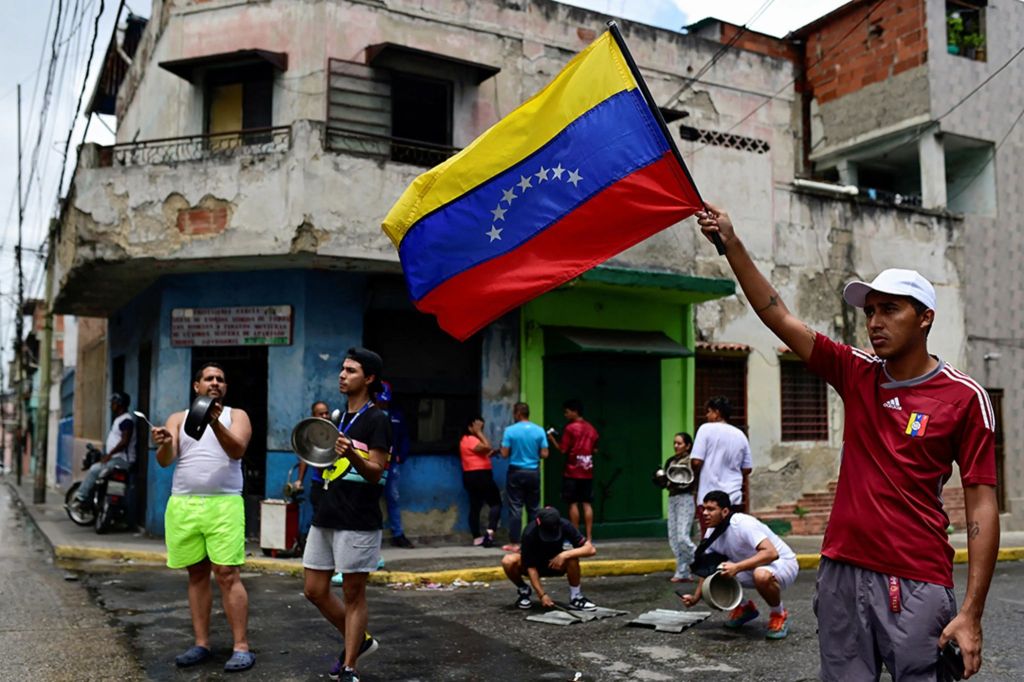


 RedStar Podcasts
Leave a comment