
Please find below a proof read transcript of Episode 4;
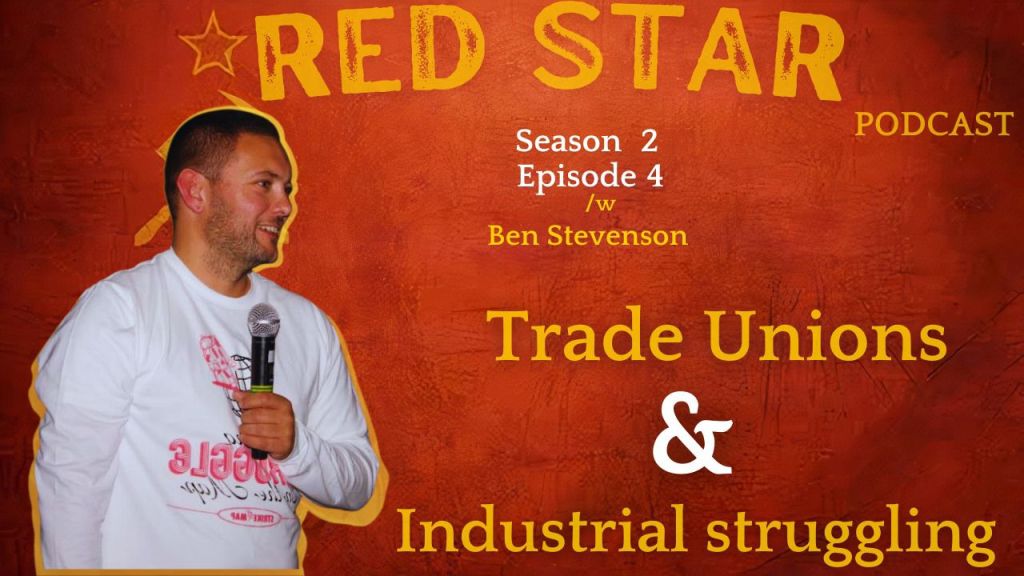
Muhammad Mustafa :
Welcome to RedStar Podcast, Season 2, Episode 4. I am Muhammad Mustafa, Editor of the RedStar Podcast. Today, we are joined by Henry Fowler, the cofounder of the Stripe Map and a trade unionists. Please, stay with us and find out more about what we bring into this episode.
Ben Stevenson – 0:03
Okay.
Ben Stevenson – 0:04
Well, welcome, Henry.
Ben Stevenson – 0:06
It’s good to have you on.
Ben Stevenson – 0:08
Thanks, Ben.
Ben Stevenson – 0:09
It’s fantastic
Henry Fowler – 0:09
to be on.
Henry Fowler – 0:10
Thank you for having us.
Ben Stevenson – 0:11
Excellent.
Ben Stevenson – 0:12
Well, we wanted to start really by getting a sense of what is Stripe Map about.
Ben Stevenson – 0:20
What are the driving forces behind it?
Ben Stevenson – 0:23
Why did you decide to, take this approach in the first place?
Ben Stevenson – 0:29
How did it all come about?
Henry Fowler – 0:33
Well, I mean, there’s there’s a lot to it now, and it’s we’re in we’re nearly at our 4th birthday as we re record this, podcast, which is really exciting.
Henry Fowler – 0:43
So, essentially, Stripe Map was started in, December 2020, by myself, and a good comrade of mine, Robert Paul.
Henry Fowler – 0:54
And we decided to launch it after reading a text that Workers’ Inquiry or edited by Robert Evets, an American academic and author who’s written other books that I would recommend.
Henry Fowler – 1:09
He wrote about the idea of workers inquiry for the the Marxist idea of understanding workers struggle from below and the recomposition of capital and labor.
Henry Fowler – 1:18
And his chapter in the book talked about credible strike threats.
Henry Fowler – 1:22
And what he was doing through, you know, people just uploading this themselves, like, voluntarily, so self selecting to an extent, but they would upload to a Google form when they made a threat of strike action.
Ben Stevenson – 1:34
Nice.
Henry Fowler – 1:34
whether or not it had succeeded or failed.
Ben Stevenson – 1:34
And
Henry Fowler – 1:37
So they weren’t putting any strikes on a map.
Henry Fowler – 1:39
They weren’t putting strikes up.
Henry Fowler – 1:40
They were putting the threat of action.
Henry Fowler – 1:42
They obviously industrial relations context and the bargaining context of the contract, and the threat of action as part of that cycle is different in the US.
Henry Fowler – 1:49
So It is.
Henry Fowler – 1:51
If it’s if it’s that context.
Henry Fowler – 1:52
And I I I read that chapter, and I think I phoned Rob immediately and just said but I know this is a bit bonkers at the moment because remember the pandemic is quite extreme.
Henry Fowler – 2:02
That December, we were told we couldn’t see our families unless they were dependents or we were caring for them, etcetera, or into that bubble, whatever the wording was.
Henry Fowler – 2:11
Yes.
Henry Fowler – 2:13
Why don’t we create a searchable map where we put all of the strikes that are happening on a specific day up so that people can see where their nearest strike is?
Henry Fowler – 2:24
And I said, I’ve just read this chapter of this book, and they’re doing something similar, but not quite the same, but we could take a step further.
Henry Fowler – 2:31
And then we discussed at length, well, yeah, actually, we never know where the nearest strike is in our local area.
Henry Fowler – 2:36
We have to hunt down the press release buried on some website.
Henry Fowler – 2:40
It’s impossible to know where to send solidarity either financially or to go where the picket line is.
Henry Fowler – 2:47
And shouldn’t all this be a bit easier, essentially?
Henry Fowler – 2:50
And so me and him sat down, and we said, right.
Henry Fowler – 2:53
Well, let’s develop some key aims of what this site would do.
Henry Fowler – 2:55
And these aims are still the aims to this day, and we go back to them as a steering group and as the project’s developed.
Henry Fowler – 3:00
And those aims are simple.
Henry Fowler – 3:02
Aim 1 is to document and present the levels of strike action in the country.
Henry Fowler – 3:06
Aim 2 is to enable others to see the levels of action and pass on the message of solidarity.
Henry Fowler – 3:12
Aim 3 is to encourage other workers in their struggles.
Henry Fowler – 3:15
And aim 4, which is a newer aim, which I can talk about either is a part of this answer or in a future answer, is about bringing those that are leading struggles together into a network.
Henry Fowler – 3:27
So those that are leading strike action or campaigns and disputes into a network.
Henry Fowler – 3:31
And that was a slightly later aim added as we saw this huge strike wave from 2021, really, into 22, and then kind of, the culmination of that in in in the spring of 2023, that we saw.
Henry Fowler – 3:48
So that’s the background to why we why we started it.
Henry Fowler – 3:54
Just before that, which is a preceding project, but it’s how me and Rob Paul started working together, the the other cofounder of Stripe Mart, was we had done during lockdown.
Henry Fowler – 4:03
We had initiated a campaign called red for key workers, very similar to the kind of American wear red for educators or other ideas.
Henry Fowler – 4:11
So not original in that sense.
Henry Fowler – 4:13
But Rob’s idea was, could we, with everyone at home, could we get everyone wearing red for key workers rather than the claps on doorsteps and other things, and people to put a political message with that, whether it be sufficient PPE, you know, funding or other things that workers in the key industries that were keeping the country going were asking for.
Henry Fowler – 4:32
So we got thousands of people to wear red for key workers in less than a month all around May Day.
Henry Fowler – 4:39
We chose May Day deliberately to repoliticize and to reuse May Day during a period where we’re all at home and feeling quite isolated from each other.
Henry Fowler – 4:47
So, we did that, and it was really successful.
Henry Fowler – 4:50
People would have just uploaded photos.
Henry Fowler – 4:52
We had as simple, as it was then Twitter and Facebook account, and people just uploaded photos.
Henry Fowler – 4:58
Rob had some fantastic contacts.
Henry Fowler – 4:59
We got some good MPs and some good political commentators and figures to do it, and thousands of people did it.
Henry Fowler – 5:05
And we were like, wow.
Henry Fowler – 5:07
This shows you that the power of solidarity, of using the online form, but also getting people to do something in the real world that you then amplify online rather than the other way around.
Henry Fowler – 5:17
And also about recapturing May Day is an important day of an expression of working class solidarity, power, and a sense of we can build a new world.
Henry Fowler – 5:27
And that’s essentially what we did in May 2020, and then if you think about it, Stripe map conversation happens in and then launches in December 2020.
Henry Fowler – 5:37
So that was really the that was really the start of this kind of project of how do we build workers’ solidarity, you know, during a period of crisis in the pandemic, and then what does that look like?
Henry Fowler – 5:49
When we launched Stripe Map, I think there were 4 or 5 strikes.
Henry Fowler – 5:53
One of the biggest ones being air traffic controllers in, in and around a set of Scottish islands from memory and it, prospect.
Henry Fowler – 6:03
Yes.
Henry Fowler – 6:04
Workers represented by prospect that were taking the action, but there wasn’t many strikes on the map.
Henry Fowler – 6:09
But me and Rob said that we always felt, very much true with the cost of living crisis that led that due to the nature of the pandemic where employers are losing profit, government is subsidising large genuine businesses and not genuine businesses to pay workers to potentially not come to work or to be on, different furlough schemes, etcetera.
Ben Stevenson – 6:33
Yeah.
Henry Fowler – 6:34
Capital would want that money back and we want, you know, that is essentially almost like deferred wages.
Henry Fowler – 6:40
They’d want to take all of that back and with a vengeance both in our pocket as a consumer, but also in a worker in terms of our terms and conditions at work.
Henry Fowler – 6:47
So we foresaw that there would be a period of conflict between capitalism and labor.
Ben Stevenson – 6:51
Yes.
Henry Fowler – 6:52
But we had no idea the extent that that would be that we saw from, like I said, the end of 21 going into 22 and 23, like, completely underestimating.
Henry Fowler – 7:01
I think the most amount of days lost since 2011 or 2014.
Henry Fowler – 7:06
I always forget which which one was a slightly higher peak, but, you know, an incredible amount of action in that 2022.
Henry Fowler – 7:13
So that was the genesis of Stripe Map and the preceding projects and the thinking around it and the aims.
Henry Fowler – 7:13
Yeah.
Ben Stevenson – 7:19
Well, I think in some ways, you always get that period of of of sort of punctuated, you know, because you get that after wars in particular or certainly you did, you know, when we look back in in terms of that kind of, cycle of industrial relations, that does happen, on on that kind of cyclical nature that just happens to align with, you know, the, the the cycle of profit and loss and the the general way of help
Henry Fowler – 7:45
me help you.
Ben Stevenson – 7:46
The trends of economic, development in capitalism.
Ben Stevenson – 7:51
So yeah.
Ben Stevenson – 7:52
Absolutely.
Ben Stevenson – 7:53
I mean, what’s really interesting to me is the fact that in a sense, you know, it was a simple idea, but it was very you had a very clear set of political messages attached to it.
Ben Stevenson – 8:05
I suppose that’s in a way, what we’re trying to do with this podcast is that, yes, we’re just doing a podcast, but we’ve got very clear ideas about what we want to project and how we want to but we’ve got very clear ideas about what we want to project and how we want to, try and build those kind of, notions.
Ben Stevenson – 8:13
So in a sense, it it it seemed like the kind of the idea arrived at just about the right time, in that sense because people were looking for ways to find different ways of connecting.
Ben Stevenson – 8:33
I mean, I remember trying to, you know, get this kind of information, when we were at the Morning Star, and just trying to build a database of, like, who are the kind of key contacts, who are the, every time there’s a dispute, can we not, you know, make a note of who we are speaking to from a journalistic point of view so we know that that’s a potential activist
Henry Fowler – 8:55
and so
Ben Stevenson – 8:55
on and so forth?
Ben Stevenson – 8:57
You know, so with in a sense, with big organizations, getting them to adopt a kind of you know, trying to get, for example, Unite to do something like this Yeah.
Ben Stevenson – 9:08
In a way, you know, I think we do need these kind of startup organizations as well to be able to kind of, you know, demonstrate that it is possible, and that there is a a kind of, not just a a desire for it, but also a need.
Henry Fowler – 9:27
I mean, you know, the lots of people have said similar things, but the one that sticks in my mind is, you know, the late Bob Cray.
Henry Fowler – 9:27
Yeah.
Henry Fowler – 9:35
You know, we’re either more organized than the bosses or the bosses are more organized than us.
Henry Fowler – 9:39
You know, really, it’s simple as that when you boil it down and what you’ve described, you know, in terms of being able to, to an extent, it it impacts small, medium, and large sized trade unions and unions who or groups of workers that aren’t in the union but are taking some kind of collective action.
Henry Fowler – 9:57
Mhmm.
Henry Fowler – 9:57
You know, activism in of itself is peaks and troughs of activity.
Henry Fowler – 10:04
Yeah.
Henry Fowler – 10:04
And that that that person that potentially leads that dispute at that time won’t necessarily be there at the next dispute, etcetera, if it’s a a local employer or, and with some of these bigger unions, the way in which they work and disseminate information and the autonomy of different structures of the unions, some of which is incredibly healthy and democratic, it makes that collating information very difficult, which I think is why, you know, we’re very pleased.
Henry Fowler – 10:32
You know, the Stripe map steering group is really pleased and, you know, is really looking forward to celebrating our 4th birthday.
Henry Fowler – 10:38
Because if you look at the project in the abstract, it hadn’t been being done.
Henry Fowler – 10:43
It’s not a new idea.
Henry Fowler – 10:45
Lots of similar concepts have existed across the campaigning, political, and and trade union space for a long period of time.
Henry Fowler – 10:51
And anyone could have been doing it forever, essentially, is how you see it.
Henry Fowler – 10:55
But the idea of maintaining that and that constant churn, finding the information, collating it, presenting it in a meaningful and useful way, you know, then sending that information and people that are accessing it back to the people in the struggle so that they get some energy from it.
Henry Fowler – 11:12
All of that is is is quite a difficult challenge, and we’re thankful to the huge amount of volunteers, activists, you know, individuals and union branches, trades councils, regional unions, and national unions that have supported us in in delivering the Stripe Map project, lots of different ways over the last 4 years.
Henry Fowler – 11:32
It just wouldn’t be possible without that buy in and that support from them.
Ben Stevenson – 11:36
I think in a sense, after you’ve created it, everybody can see the value in it.
Ben Stevenson – 11:36
Absolutely.
Ben Stevenson – 11:41
Right.
Ben Stevenson – 11:41
But whilst it’s
Ben Stevenson – 11:42
know, I I just imagined, if it hadn’t have been, you know, for the lockdown, maybe you might have spent the time going trying to shop it to different unions to get a start up going, and take the project off.
Henry Fowler – 11:42
you
Ben Stevenson – 11:55
So in a sense, sometimes it it’s just, like, the right, you know, constellation of Yeah.
Ben Stevenson – 12:03
Of of conditions, really, that Absolutely.
Ben Stevenson – 12:06
Bring about these kinds of things.
Ben Stevenson – 12:08
Yeah.
Ben Stevenson – 12:08
And and and it’s a it’s a vital resource, now for anyone.
Ben Stevenson – 12:13
I mean, I I think there is a big question there about, I think, industrial relations and particularly how it’s covered, how it’s looked at in terms of the media, the wider mass media, and really the sheer level of ignorance that there is about, you know, I mean, obviously, people like Mitt Lynch usually take, the, the the the right wing pundit, to task, very easily on it, because they’re usually coming from a position of extreme ignorance.
Ben Stevenson – 12:46
Yeah.
Ben Stevenson – 12:47
Because most of the commentators they got are not people who don’t have any experience of what it’s like to actually be in a unionized employment.
Ben Stevenson – 12:55
Or or or don’t recognize the benefits of that.
Ben Stevenson – 12:55
Absolutely.
Ben Stevenson – 12:59
So, but those of us who do, we can see that there’s a that there’s a gap there, isn’t there?
Ben Stevenson – 13:05
And I think that’s
Henry Fowler – 13:06
Yeah.
Ben Stevenson – 13:07
Why it’s been so important for us to also sort of build and control these things ourselves as well, not just rely upon, you know, the whims of, billionaires who own multimedia platforms these days.
Henry Fowler – 13:29
I mean, that’s that’s absolutely right.
Henry Fowler – 13:29
Yeah.
Henry Fowler – 13:31
And I guess an unintended consequence, if I was honest, is that we started as a tool for activists to use amongst activists.
Henry Fowler – 13:40
So if people don’t put things on the map, our view was it doesn’t go on the map.
Henry Fowler – 13:44
It’s only as useful as the movement allows it to be and as activists allow it to be.
Henry Fowler – 13:47
You know?
Henry Fowler – 13:48
So one of those kind of we’ve got a more mixed approach now, if I was honest.
Henry Fowler – 13:52
We left that purity behind of a kind of rank and file grassroots movement.
Henry Fowler – 13:57
And some, some unions Yeah.
Henry Fowler – 14:01
Upload their action.
Henry Fowler – 14:03
Some mainly activists do it.
Henry Fowler – 14:07
And then there is a group of our volunteers, strike hunters, strike finders, that maintain, you know, a kind of central database.
Henry Fowler – 14:13
Yeah.
Henry Fowler – 14:14
Why I say all that is because it links to your point, which is around the kind of ignorance, but then also providing a platform that then can be used by things like the media, which, again, wasn’t our genesis of why we created the idea and why we’ve done it.
Henry Fowler – 14:28
But it has become a place, you know, from the New Yorker magazine, which I’ve been told is a quite a big deal by people, to the the Mirror, to, you know, Navara Media, to the Morningstar
Henry Fowler – 14:44
Our pay our map and the data it produces and bespoke maps of different picket lines, like the paramedic strike, for instance, in 2022, have either been embedded, written about, or used in those media publications and on several occasions, not just one off.
Ben Stevenson – 14:44
Yeah.
Henry Fowler – 15:00
So it has become a unofficial data source.
Henry Fowler – 15:04
You know, it’s not we’re not the Office for National Statistic.
Henry Fowler – 15:08
We don’t claim to be, but one of our aim is to try and encourage people.
Henry Fowler – 15:11
There is a bit more action than, than people think is out there.
Henry Fowler – 15:16
And that’s why on, on the 5th December, we’re gonna be launching a first ever academic report into the data we’ve captured.
Henry Fowler – 15:25
So this is being a report that has been written by absolute experts on industrial action data who spend a lot of time speaking with the ONS about it, and that’s doctor Andy Hodder at University of Birmingham and doctor Steven Mushing at University of Manchester.
Henry Fowler – 15:41
And I’ve got, at the moment, looking through that first draft of the report, and it is genuinely fascinating.
Henry Fowler – 15:47
Our data had produced so much rich information, which has left out the government, the stats, that Steven and Andy are then gonna now use that data in their academic work going forward.
Henry Fowler – 16:00
And so Stripe Map will continue to be cited now as an activist tool, a data tool that can be used by the press, and a data tool that can be used by the movement and also academia to understand struggle, in Great Britain and the island of Ireland.
Henry Fowler – 16:13
So, you know, these things become more than what you probably ever imagine.
Henry Fowler – 16:18
But it was never, you know, as our data has got better and better and the use of the map and, you know, we’ve had we’ve mapped 230,000 workplaces taking action.
Henry Fowler – 16:18
Yes.
Henry Fowler – 16:29
Yeah.
Henry Fowler – 16:30
We’ve had, you know, loads of affiliations from different organizations to support the map on what we’re doing.
Henry Fowler – 16:39
Thousands of people we’ve through our campaigns, we’ve got to sign up to visit their local picket.
Henry Fowler – 16:44
And we’ve raised 1,000 of pounds for striking workers.
Henry Fowler – 16:47
It’s gone directly into the pockets of people to make sure they’re not starved by back to work in in industrial relations landscape under the certainly, the 2016 and and to an extent, the minimum service levels with the 2016 act, which has meant disputes have been really lengthened as employers know that after that 6 months, you’ve gotta go and get the ballot mandate again.
Henry Fowler – 17:06
That kind of solidarity, both financial and in support online and going to picket lines and encouraging that has become really important.
Henry Fowler – 17:14
So I’d say we’ve never lost that kind of why we why we started, but, you know, we probably have several audiences now, which isn’t just the activists in trade union world, but it’s the media and also academia, which makes the project interesting.
Henry Fowler – 17:29
Yeah.
Ben Stevenson – 17:30
Absolutely.
Ben Stevenson – 17:30
Yeah.
Ben Stevenson – 17:31
I I think you you’re absolutely right.
Ben Stevenson – 17:32
I was thinking, you know, what an incredible repository of information, that would be and will be for future generations as well.
Ben Stevenson – 17:43
You know, like you say, we, you know, we pour over the sort of the IRS statistics and try and, you know, come to conclusions about what level of industrial action there is and what that says about what’s going on.
Ben Stevenson – 18:00
But, I mean, we know that, obviously, industrial action could be suppressed for Yep.
Ben Stevenson – 18:06
Often several years.
Ben Stevenson – 18:07
And I think, really, what we what we saw in many ways that, you know, was quite transformative in in some ways was we were seeing groups of workers who were going on, like, take going on strike for the first time.
Ben Stevenson – 18:25
And I remember taking one of my health and safety classes out to one of the teachers’ demonstrations.
Ben Stevenson – 18:33
And they’d been you know, there are a couple of them who’d been out on Stripe, B and Q, Wincunton, and a few others, you know, themselves.
Ben Stevenson – 18:42
And they were, you know, cock a hoop about this.
Ben Stevenson – 18:45
This was, like, you know, absolutely amazing.
Ben Stevenson – 18:47
They were great.
Ben Stevenson – 18:49
It was a great, you know, day for them.
Ben Stevenson – 18:53
Gone back to the classroom.
Ben Stevenson – 18:54
They were all, you know, enthused and, revived.
Ben Stevenson – 18:59
So it was it was really a great, experience from that perspective as well is that, you know, I think the working class has sort of lost that a little bit, that sense of collective fight back.
Ben Stevenson – 19:14
You know?
Ben Stevenson – 19:15
What do you do if somebody is attacking you?
Ben Stevenson – 19:17
You don’t curl up in the ball and, you know, ask them to keep kicking, which is what we’ve done for the last sort of few decades.
Ben Stevenson – 19:27
We you you you you get up and you start kicking back and say, I’m gonna go and get 20 of my mates to come down and, you know, sort you out.
Ben Stevenson – 19:35
But that’s that’s that’s, I think, the the difference, you know, is that, I think, you know, we’ve seen a total transformation of the industrial landscape in Britain in the last 4 years, to the extent that, you know, collective action.
Ben Stevenson – 19:56
I mean, what’s the story today?
Ben Stevenson – 19:58
The pharmacists are going on are gonna go are going to go on strike.
Ben Stevenson – 20:02
Although they can’t call it a strike because it’s they’re going to just adjust their opening hours.
Ben Stevenson – 20:06
They’re gonna work to, work to rule.
Ben Stevenson – 20:09
I
Ben Stevenson – 20:09
Yeah.
Henry Fowler – 20:10
should say that, also, we’re aware in Stripe Map of the limitations of what we collect.
Henry Fowler – 20:15
So, like I said, it’s either volunteer or activist uploaded or the trade unions upload it themselves.
Henry Fowler – 20:23
But then also, all of the action that we put on the map, we don’t, discriminate on groups of workers.
Henry Fowler – 20:32
So those people that take action and, you know, they could be a part of any trade union or, you know, or not.
Henry Fowler – 20:39
But they have to have been through a they’re normally or most of the time, if not all of the time, they’ve been through that industrial relations hoops of the formal battle in the care for all of that.
Henry Fowler – 20:54
So when we don’t capture, which would have been really, really interesting, and we work with sister projects around the world who do capture more, I’d say, more interesting information around walk offs, the unofficial forms of action, collective action, which are really, create a lot of disruption in production wherever they are, but are not, you know Yes.
Henry Fowler – 21:17
Unofficial stuff.
Henry Fowler – 21:18
They just on the picket line and stuff like that.
Henry Fowler – 21:20
So so we don’t capture any of that.
Henry Fowler – 21:22
So I would say that there’s a huge gap as well in our knowledge as a movement and and within the wider workers’ trade union and labor landscape that there are lots of forms of different collective action that workers can take and to not fetishize the strike in the way that we understand it of going through that process, being out on the picket line, and then, as being the only form or expression of that.
Henry Fowler – 21:47
And, you know, my hope and ambition would be that, you know, with a bit more capacity and and a team that had, you know, some of the resources that other Stripe Maps around the world have, you could start to maybe document that a little bit.
Henry Fowler – 22:01
Obviously, you’d be starting from today.
Henry Fowler – 22:03
So you’ve obviously lost, you know, a lot of time potentially from that big period of action.
Henry Fowler – 22:08
But, you know, we we work with lots of different groups and, like, the blacklist support group, you know, talk to us a a lot and teach us a lot about the history was certainly within the building and and, you know, linked trades of that unofficial forms of action, demonstration, and occupation.
Henry Fowler – 22:27
And right now, there’s the factory in Italy where those workers are occupying the factory to then run it by workers to generate the batteries, I think for for cars and for other vehicles.
Henry Fowler – 22:38
And there’s a very interesting ongoing, occupation, and they’re they’re encouraging trade union branches from this country and and all around the world to buy shares in this co op so the workers the factory’s been shut by the employer and the workers then take it over and then continue production.
Henry Fowler – 22:54
It’s a really interesting I can’t remember where it is in Italy, but Real News have been documenting it at length.
Henry Fowler – 23:01
And, you know, so there’s those kind of very
Ben Stevenson – 23:03
like the UCS, work in them in that sense.
Henry Fowler – 23:06
Yeah.
Henry Fowler – 23:07
Yeah.
Henry Fowler – 23:07
Yeah.
Henry Fowler – 23:07
Exactly.
Henry Fowler – 23:08
And it comes back to your point that you raised, which I think is an interesting one, which is what I feel like this period has been fantastic, but what I feel like we still haven’t quite got back to or have acknowledged we’re not quite there yet is the social side that you talked about.
Henry Fowler – 23:08
Yeah.
Henry Fowler – 23:08
Yeah.
Henry Fowler – 23:24
And it comes down to the nature of the disputes, which on the whole, you know, we’ve shown over the last 3 years when we do our kind of annual tally up of the data has been pay has been the overwhelming reason for for action, is the we’ve lost the whole worker in the kind of approach.
Henry Fowler – 23:42
And there’s a danger of that kind of economistic thinking and that trade unions win on a paying commission dispute on this day.
Henry Fowler – 23:48
We then go back to work, and then the pay dispute may come up again or something else to do with conditions.
Henry Fowler – 23:52
And we’ve got that continual idea of the trade union is the place where we, socialize, where we, provide support and solidarity in lots of different ways, whether it be from, you know, food, whether it be from shelter, all of those things that, you know, miners, communities did to always, not just during the miners dispute, but as a fundamental unit of social, collaboration and support and solidarity of one another and community, which largely, obviously, neoliberalism, it was a deliberate project to to try and erode.
Ben Stevenson – 24:30
Yeah.
Henry Fowler – 24:30
Getting back, back, back into that space is, for me, the next kind of phase I’m quite interested in.
Henry Fowler – 24:37
It’s not just the disputes itself, but how do we reorientate trade unions into being the place where people go and where people, continue to be supported?
Henry Fowler – 24:46
And, at the moment, in Tower Hamlets Trades Council have opened a workers’ center in support with other trade unions in Tower Hamlets.
Henry Fowler – 24:58
And, essentially, what they’ve provided is there’s a space in London within their borough where they will be for a certain amount of hours for certain amount of days, and they will help people with all sorts of things, whether it be employment issues, whether it be, housing, whether it be an employer that’s taking the, you know, taking the mickey out of workers and working across lots of different languages, not really mainly English in lots of lots of ways.
Henry Fowler – 25:24
But that idea that the workers’ centre isn’t a place that is instead of the industrial dispute and the collective bargaining, which you would argue has happened in some is the politics of the worker centre in America, context, but actually a place where you start to build up that sense of the social place with a physical building where people go and the people, build a common sense of the political purpose and move beyond fighting bits and bobs under capitalism and start to think about how do we build a different society and an alternative future.
Henry Fowler – 25:55
And I think the project’s really interesting, and that’s only just really started, into our admin’s emergency, how that goes.
Henry Fowler – 26:03
And it’s not obviously possible for all trades councils, but there’s something in that sense of going back to the community and social aspect of what made trade unions powerful rather than just disputes or bust.
Ben Stevenson – 26:13
Yeah.
Ben Stevenson – 26:14
Absolutely.
Ben Stevenson – 26:14
No.
Ben Stevenson – 26:14
Alright.
Ben Stevenson – 26:16
Yeah.
Ben Stevenson – 26:16
I couldn’t agree more.
Ben Stevenson – 26:18
I mean, it it’s interesting to have Hamlets because it’s obviously one of the most deprived boroughs in Yep.
Ben Stevenson – 26:24
London.
Ben Stevenson – 26:26
And, you know, huge Bengali, community there, as well.
Ben Stevenson – 26:31
And a huge history, of course Yeah.
Ben Stevenson – 26:34
Of, working class organization struggle and, so on and, so forth.
Ben Stevenson – 26:40
So, you know, absolutely.
Ben Stevenson – 26:42
And these these kinds of things still exist, I think, in different parts of the country.
Ben Stevenson – 26:46
You get isolated pockets of them.
Ben Stevenson – 26:48
You know, this is unemployed work center in Derbyshire.
Henry Fowler – 26:51
That’s a good example.
Henry Fowler – 26:51
Exactly.
Ben Stevenson – 26:53
You know, the you get, like, even socialist, you know, walking club, buildings that are still there.
Ben Stevenson – 27:02
You know, in many ways, the the kind of although it’s retreated, it’s there are still pockets of those things that still exist in in the culture and the social sphere.
Ben Stevenson – 27:14
And it’s, you know, I think more than more than anything, people are looking for, an uncommodified way of of Yeah.
Ben Stevenson – 27:22
Connecting and being able to express themselves in in in lots of ways.
Ben Stevenson – 27:27
So I I mean, that that’s definitely something that we’re, interested in in kind of featuring and, focusing on.
Ben Stevenson – 27:37
I think you’re absolutely right in in terms of fundamentally, isn’t it about encouraging people to take on collectivist solutions to, problems?
Ben Stevenson – 27:50
You know, the natural reaction from most workers now to the boss being a complete tool is to walk away from the job.
Ben Stevenson – 27:59
Yes.
Ben Stevenson – 28:00
don’t want them to do that.
Henry Fowler – 28:00
We
Henry Fowler – 28:01
Yeah.
Ben Stevenson – 28:02
We want them to stay there
Ben Stevenson – 28:03
fight together.
Henry Fowler – 28:03
and
Ben Stevenson – 28:05
You know?
Henry Fowler – 28:06
No.
Henry Fowler – 28:06
Yeah.
Ben Stevenson – 28:06
our job better.
Henry Fowler – 28:06
That’s make
Ben Stevenson – 28:08
You know?
Ben Stevenson – 28:08
That that is how tube drivers have got to be paid a 100,000, although they’re not paid £100,000.
Ben Stevenson – 28:15
But, you know, always quoted the tube guy.
Ben Stevenson – 28:18
Why?
Ben Stevenson – 28:19
From a tube, it’s easy.
Ben Stevenson – 28:21
Well, you go do it then if it’s so easy.
Henry Fowler – 28:24
Yeah.
Henry Fowler – 28:25
I think I think that that’s I think that that is right.
Henry Fowler – 28:28
And, you know, Stripe map a couple of years ago, we took the decision with the Baker’s food and our workers union.
Henry Fowler – 28:39
Now supported by ASLEF, the national union of students, always supported from the beginning notes from below.
Henry Fowler – 28:46
We created the Organise Now project, which is about what you’re saying, which is how do you systematically rebuild workplace organisation to make work as good as it can be, but certainly to improve work through collectivist solutions rather than the quiet quitting that we hear so much about in the in the liberal and mainstream press as a phenomenon now.
Henry Fowler – 29:09
And, you know, making it about different generational conflict all the time rather than about the the idea around class and the position of worker under capitalism.
Henry Fowler – 29:18
And Organise Now essentially is a simple idea where a worker fills out a form online to say they’re not happy about something.
Henry Fowler – 29:27
And then within 72 hours, they get a volunteer who will talk to them in a little bit more information to understand the context, and then a further follow-up call with someone with some industrial experience, trade union experience in in dealing with those kind of in building those collective solutions, who will then not tell them what to do in a kind of top down guru approach.
Henry Fowler – 29:47
We don’t believe in those guru 12 step plans to organize, and we fundamentally oppose that and everything it stands for.
Henry Fowler – 29:53
But, essentially, just to support the worker to find those collective approaches.
Henry Fowler – 29:58
And that will be different depending on the situation.
Henry Fowler – 30:00
If it’s a unionised workplace, a non unionised workplace, a multi unionised workplace, and all those things.
Henry Fowler – 30:05
And it wasn’t our idea.
Henry Fowler – 30:07
In in America, the Emergency Workplace Organising Committee, EWOC, created through the COVID pandemic to deal with the the terrible lack of PPE, certainly in in the hospitals, but also across all of society and quite chronic in places like New York, if you remember the horrific scenes of, the amount of bodies and the burying and the, and the, just the chaos in, in places like that, they shared very highly popular.
Henry Fowler – 30:33
You know, areas where lots of population and essentially that was what the project was started from, and then it became what now organized now is, you’d say, the UK version of that.
Henry Fowler – 30:44
And they’ve organized and supported tens of thousands of workers all across the US, which obviously is just a huge country.
Henry Fowler – 30:52
And when you see the fruits of not the jet the start of, but the fruits of spreading things like the Starbucks Workers United Mhmm.
Henry Fowler – 31:01
Work, Amazon, Trader Joe’s, some of that can be routed directly back to Ewok as a project.
Henry Fowler – 31:08
And I’m talking about now they are huge.
Henry Fowler – 31:10
Like, we have tens of thousands of people all involved in different levels, volunteers, some paid staff.
Henry Fowler – 31:16
It’s moved beyond.
Henry Fowler – 31:18
But essentially, it’s about systematically, rather than talking about the client, how do we reinvigorate, like you said, collective solutions to improving work and to fighting back against bad bosses and in bad sectors.
Henry Fowler – 31:31
And so we took that here, and it’s been a different experience for us.
Henry Fowler – 31:35
We’ve had mainly hospitalities you’d expect with the bakers union being involved, but health and social care and education are the next 2 sectors that are contacting us highly, relatively in the country, unionised areas with historic agreements and levels of collectivisation and trade unions within those sectors.
Henry Fowler – 31:53
Yeah.
Henry Fowler – 31:53
It’s those groups of workers that are coming to us saying, I wanna start something on my work, but I’m not happy about this.
Henry Fowler – 31:59
So the the the the transfer from the US, to UK hasn’t led to the new worker organizing, which we were hoping to, but has led to us supporting the reinvigoration, rejuvenation, and, you know, identification of how we use trade union vehicles of collectivism to to overcome, problems at work and also rebuild the trade union movement, which, as we know, recruited 89,000 workers in in 2023, but in 2022 lost 220,000, 2 thirds of them women in the private sector.
Henry Fowler – 32:30
So we believe that that is important, and that’s why we created OrganiseNow because that’s not what Stripe Map does.
Henry Fowler – 32:34
That’s what OrganiseNow does, and we would encourage others to to join that kind of collective project and help it develop as the Emergency Workplace Organising Committee in the US has.
Ben Stevenson – 32:44
Yeah.
Ben Stevenson – 32:44
No.
Ben Stevenson – 32:45
I mean, I think you’re right.
Ben Stevenson – 32:47
And those 2 sectors, well, health and education, are notorious for such high levels of burnout as well.
Ben Stevenson – 32:54
People leaving the sector, you know, the the they’ve been laboring under staffing crisis for years now, and it’s getting worse and worse and worse and worse.
Ben Stevenson – 33:03
And, you know, obviously, we’ve got the situation now where in a sense, we’re being well, particularly health, the NHS has been given sort of just about enough money to survive for the next 2 years, if nothing catastrophic changes.
Ben Stevenson – 33:22
And, you know, that managerialism which we’ve seen, you know, in terms of, how they’ve approached, you know, the benefit system, how they’re approaching the, industrial relations more generally, that that that kind of managerialism is is is just, you know, not of success not going to be a successful strategy, is it, politically?
Ben Stevenson – 33:53
And I think we we we’ve we’ve got this, you know, situation where there is, you know, I remember, Bill Greenfield’s always told me the same, story.
Ben Stevenson – 34:05
The Chinese have the a single character, for crisis, and it means danger and opportunity at the same time.
Ben Stevenson – 34:13
So, I’ve I’ve no idea whether or not it’s apocryphal or not, but, that that’s, it’s a good one.
Ben Stevenson – 34:20
But there are both dangers and opportunities, though.
Ben Stevenson – 34:22
Absolutely.
Henry Fowler – 34:23
Yeah.
Henry Fowler – 34:23
Yeah.
Ben Stevenson – 34:24
For the left more broadly, but for, socialist, communists, etcetera, people who want to achieve more than just, you know, a slightly better improved situation for the working class, but a a transformed society.
Henry Fowler – 34:40
And we’ve seen, haven’t we, in the the dreadful genocide in Gaza, the huge rise, of far right violence, views and, you know, mobilisations on our streets, haven’t we?
Henry Fowler – 34:40
Yeah.
Henry Fowler – 34:58
We’ve seen the our trade unionism has to always be bigger than that economic struggle and always has to have within it that politics of a united working class, which is our history.
Henry Fowler – 35:10
Right?
Henry Fowler – 35:10
It’s nothing new.
Henry Fowler – 35:11
It’s it’s it’s history repeating itself.
Henry Fowler – 35:15
First is tragedy, second is fast as someone said.
Henry Fowler – 35:18
But the the sentence of we build, I think the left is building that idea that trade unions are inherently political vehicles and that we have to build a left politics and an alternative economic strategy, an alternative to what we see happening, which we don’t like, and make sure that that is bigger than just the economic struggles of disputes and strikes, etcetera.
Henry Fowler – 35:48
And for me, that’s a live debate, and there are those on the left that are trying to do that and that kind of whole worker organizing an approach and whether that be, like I said, dealing with the monumental housing crisis, all the way up to, like I said, saying that standing up to the far right and organizing against the far right and, you know, working with different communities to move people away from the far right is trade union work.
Henry Fowler – 36:14
It’s not an additional thing and standing up for, you know, a a free Palestine against the genocide in Gaza is a trade union issue.
Henry Fowler – 36:23
They’re not, unrelated, issues, and our trade unionism is over here, and these some, you know, horrible atrocities happen here.
Henry Fowler – 36:31
So I think that that is, incredibly important to continue to build that alternative in the left and then to take that in and try and win those positions, wider within the trade union movement, I think is is really important.
Henry Fowler – 36:45
And we’ve seen that a sharpening of that in light of those two situations I’ve mentioned before that are happening concurrently, you know, on the international and domestic stage.
Henry Fowler – 36:56
So we must continue to do that.
Henry Fowler – 36:58
And we’ve seen that unless we do that, certainly with that alternative economic, approach that says that this is how we’re gonna improve people’s lives, that we elect people like Donald Trump.
Henry Fowler – 37:10
And we’ve just seen that, haven’t we, in the US, and that was, you know, as an ideal forage.
Henry Fowler – 37:14
Yeah.
Henry Fowler – 37:15
And and Reform UK getting an electoral base and sitting in parliament and a degree of legitimacy and potential to win big at the Welsh upcoming Welsh elections, it it is a renewed and different threat to before.
Henry Fowler – 37:15
Exactly.
Henry Fowler – 37:29
There’s a level of, you know, we have to counter that.
Henry Fowler – 37:33
But, you know, the reality is those projects vote for privatization of our NHS, which will be worse for working class communities.
Henry Fowler – 37:40
They oppose the employment rights bill.
Henry Fowler – 37:42
Yes.
Henry Fowler – 37:42
Like, you know, the when the mask slips away from the the populace, we’re on the side of, you know, normal people or whatever it’s labeled, those kind of pro political right wing projects use.
Henry Fowler – 37:55
But unless the trade union movement is political, has the alternative economic approach, wants to put that forward and win those positions in society, but also move the government to adopt policies that would improve people’s lives.
Henry Fowler – 38:08
We, you know, there there’s nothing to say we wouldn’t see, you know, the rise of reform within our electoral system.
Henry Fowler – 38:17
But we know don’t we from very clear from America that people did not think Joe Biden made their cost of living, made their standard living, made them feel better off.
Henry Fowler – 38:26
And they voted for Donald Trump because they thought that he would now whether he will or not is irrelevant.
Henry Fowler – 38:31
And what the other politics of Trump is irrelevant.
Henry Fowler – 38:33
That’s what people thought when they went to the ballot box.
Henry Fowler – 38:35
And that’s what if the trade union movement wants a non, I would say, far right government, then the trade union movement’s got to work as hard as it can to move the this Labour government into a position where it improves people’s lives in the short, medium, and then longer term as a strategy in in redefining our whole economic and political system.
Henry Fowler – 38:58
Otherwise, we do leave ourselves open, and it’s not enough to turn around and say, all these people are just racists and they’re terrible.
Henry Fowler – 39:05
We have to start looking at those material conditions.
Henry Fowler – 39:07
People’s wages have only gone down.
Henry Fowler – 39:09
People’s standard of living has only been squeezed.
Henry Fowler – 39:12
Yeah.
Henry Fowler – 39:13
Poverty is at 4,000,000 children in poverty in this country.
Henry Fowler – 39:16
Like, we’re seeing you know, it’s been austerity has been a fundamental redistribution of wealth from the poor to the rich, and we’re we are we are not seeing at the moment a reversal of that.
Henry Fowler – 39:28
And we live in a period where, trade unions offer a vehicle to oppose all of those things and to organize round and to get a better government that does better things for those.
Henry Fowler – 39:40
But also realizing that if you’re not strong enough to hold any government to account, you’re not gonna see, those improvements that we want under the system that we currently have.
Ben Stevenson – 39:50
I mean, you know, in many ways, I think a lot of the social problems that we’re seeing in society can be traced, to this fact, you know, that we have seen we basically lived, you know, 16 years of of of austerity, in post and the working class.
Ben Stevenson – 39:50
No.
Ben Stevenson – 40:12
Single biggest drop in living standards since the Napoleonic era.
Ben Stevenson – 40:15
You know?
Ben Stevenson – 40:16
It took, like, 15 years of war to wipe out the wealth that we had, back then.
Ben Stevenson – 40:23
And then that that was largely, you know, when when when half the population had to be drafted into it.
Ben Stevenson – 40:29
You know, this is, unprecedented, in peacetime.
Ben Stevenson – 40:36
And like you say, it it’s got it’s got to be phrase framed in that way that it’s been a redistribution of wealth.
Ben Stevenson – 40:43
You know?
Ben Stevenson – 40:43
You have got poorer, but the rich, forget about it.
Ben Stevenson – 40:49
They’ve seen everything skyrocket.
Ben Stevenson – 40:51
You know?
Ben Stevenson – 40:53
The, richest, 80 families own more than, the bottom 25% of the population.
Ben Stevenson – 40:53
What is it?
Henry Fowler – 41:04
Oh, I can believe it.
Henry Fowler – 41:05
I mean, some of the statistics that come out from different organizations around that, a huge gap in, and the the the growing increase of inequality, globally, but also within our country is, yeah, startling.
Henry Fowler – 41:19
So I can believe that.
Henry Fowler – 41:20
Absolutely.
Ben Stevenson – 41:21
That’s always been the you know, I’m I’m just reading a book on who owns England, which, is, both in
Henry Fowler – 41:32
England, then I take it.
Ben Stevenson – 41:33
Sorry?
Ben Stevenson – 41:33
It’s
Henry Fowler – 41:33
a very short book, then I
Ben Stevenson – 41:35
take it.
Ben Stevenson – 41:36
Sunrise There’s no big detail as to how they that it’s still basically the same people who’ve been here since 1066 Sure.
Ben Stevenson – 41:44
Who own all the land.
Ben Stevenson – 41:45
And unless we address that question, then, you know, big infrastructure project.
Ben Stevenson – 41:52
Why is it so expensive to build railway all the way up the spine of the country?
Ben Stevenson – 41:57
Because you’re having to build it through a bunch of land owners who are like, you’re not building that through my land.
Ben Stevenson – 42:02
You’ve got to pay me lots of money for the next 125 years.
Ben Stevenson – 42:07
That that that’s the you know, because that’s the compact that our our our capitalist class, made with the with the ruling landowners was was that, okay.
Ben Stevenson – 42:16
Well, we’ll continue to allow you to stay in a position of power and privilege.
Ben Stevenson – 42:20
And, you know, you could talk about House of Lords Reform.
Ben Stevenson – 42:24
You could talk about, you know, a real proper devolution deal.
Ben Stevenson – 42:30
You know, you could talk about all of these things without even talk go being bold on economic strategy now.
Ben Stevenson – 42:38
But there just seems to be so so little inventiveness, and, you know, real policy.
Ben Stevenson – 42:47
We’re we’re gonna have lead tables in the NHS.
Ben Stevenson – 42:49
Who thought that was a good idea?
Henry Fowler – 42:52
Yeah.
Henry Fowler – 42:53
And, again, it’s goes back to my last point, which was we really the uni movement needs to pick up the idea of work control.
Henry Fowler – 43:04
I think it’s like you’ve been lost.
Henry Fowler – 43:05
So, yes, fight the disputes on paying conditions, win those, generalize those, you know, FrogLeap terms and conditions, increase the power and wealth of working class people.
Henry Fowler – 43:15
Absolutely.
Henry Fowler – 43:16
But then we need to move to start to look at demands around, you know, the workers’ control and ownership of industry, not the top down nationalizations of the labor government in the post World War 2.
Henry Fowler – 43:29
We saw that replacing, obviously better than privatized systems, but replacing the people that run the railways with government or people that run the railways, is not the same as, you know, workers control of that.
Henry Fowler – 43:43
And there are lots of benefits.
Henry Fowler – 43:45
And there are lots of projects around the world which have shown the benefits of when workers control industry, what it leads to in terms of productivity, in terms of innovation, all of that.
Henry Fowler – 43:55
There’s plenty of projects that show that over the the historical development of, you know, of humanity and production on the scale that we know it today.
Henry Fowler – 44:04
But that that idea of workers control and the power of workers is is in built into why we why we launched a few years ago the kind of reps network for those that were leading some of the disputes in that period of high action was to try and bring them together to talk about how do we link together all these different fights into a coherent sense of, work control or a wider politics, but then also a sense that we’re not just gonna go back to work at the end of dispute and then wait until there’s another issue that we start to, you know, turn the tables of power on a permanent basis, under the limitations that our system provides.
Henry Fowler – 44:42
But we start to do that.
Henry Fowler – 44:44
And then linked to that come those which were launched before that, a kind of local strike clubs, which, you know, are linked in with trades councils.
Henry Fowler – 44:52
You’ve talked about unemployed centers.
Henry Fowler – 44:54
I’ve talked about different kind of solidarity spaces and community spaces, which, can be really important.
Henry Fowler – 45:00
And can they link and support, all of the action that’s happening within local areas?
Henry Fowler – 45:05
But again, be hubs that bring people together to then demand a different a different world and, you know, and to oppose on collective mass policies like you’ve just described, the latest, you know, kind of neoliberal reform of the the the lead table for NHS Trust, which we know is part of the neoliberal playbook.
Henry Fowler – 45:27
We’ve already seen it used in in education as part of the global education reform movement around lead tables and around, standardised testing and around providing a, schools fail for this reason and therefore this is the solution approach.
Ben Stevenson – 45:44
And then the bottom 25% can be quietly privatized or at least run by Virgin Healthcare or whatever.
Henry Fowler – 45:44
Yeah.
Henry Fowler – 45:52
Exactly.
Henry Fowler – 45:52
The the near the neoliberal project is, was is a fundamental about, you know, restructuring and opening up of lots of public, what it was available, communal space to enable that into private private hands.
Henry Fowler – 46:09
And that’s not necessarily just the ownership, but also the running of services.
Henry Fowler – 46:13
So Serco don’t own the NHS, but they run parts of the NHS at a huge cost to the taxpayer.
Henry Fowler – 46:19
So, you know, the extent the state has essentially rented its, you know, infrastructure and given it directly over to private private hands.
Henry Fowler – 46:28
And that’s what you know, the privatization that we see is really that’s what it is.
Henry Fowler – 46:33
It’s not the full ownership given over to the private sector.
Henry Fowler – 46:36
It’s much more pleverer than that.
Henry Fowler – 46:38
And the the the state is essentially given the keys to the private sector run elements of it.
Henry Fowler – 46:43
And that in of itself provides obviously, there’s a the political of opposing that and having that held in, you know, in common and and to be part of a system owned by us as the people of this country.
Henry Fowler – 46:57
But also those employers tend to be cost cutting employers.
Henry Fowler – 47:02
They’ve won that contract through how much cheaper it will be than whatever the current supply is, and becomes in of itself a site of struggle for workers who want to have the nationalized, for instance, NHS, but then also are the porters and the cleaners that are on poor condition contract, the the employers just ban their brakes, etcetera.
Henry Fowler – 47:20
So it’s amazing how these things are obviously all interrelated from the kind of workplace struggle all the way up to the huge political change that led to that workplace struggle, and we can deal with both the symptoms and causes in the trade union movement.
Henry Fowler – 47:33
We don’t have to just do one or the other, and that’s what I mean, I guess, about the kind of whole worker organizing and moving beyond just terms and conditions fights.
Ben Stevenson – 47:41
Yeah.
Ben Stevenson – 47:42
Absolutely.
Ben Stevenson – 47:43
No.
Ben Stevenson – 47:43
I mean, I think, it it’s interesting, isn’t it?
Ben Stevenson – 47:46
Because, I remember my granddad would always tell me, you know, don’t forget that, when they bought when they created the NCB, they just gave it to the the existing coal mines, the the existing coal mine owners.
Ben Stevenson – 47:59
Yep.
Ben Stevenson – 48:00
They were just employed by the company.
Ben Stevenson – 48:02
They employed they just employed the people who were already running it to continue running it, with the nationalized, yes
Henry Fowler – 48:09
Yeah.
Henry Fowler – 48:09
Yeah.
Ben Stevenson – 48:10
Industries.
Ben Stevenson – 48:11
And that’s why it was so easy to privatize them back as well.
Ben Stevenson – 48:15
But I think I think almost the number one industry in the UK probably is asset stripping now, you know, because we’ve we’ve become supremely good at it.
Ben Stevenson – 48:24
I was thinking the other day about British Waterways, which my dad used to deal with, you know, back before it it was privatized.
Ben Stevenson – 48:34
And he was saying, you’ve got all this land in Black and Isles.
Ben Stevenson – 48:38
Why didn’t you do something with it?
Ben Stevenson – 48:40
They did.
Ben Stevenson – 48:41
They sold it to developers Yeah.
Ben Stevenson – 48:45
On the cheap who’ve now, you know, you can’t move for a canalside or a riverside development, that is raking in the cash for some private, equity fund.
Ben Stevenson – 48:57
And that used to be ours.
Ben Stevenson – 48:58
That would have been ours.
Ben Stevenson – 48:59
It should have been ours.
Ben Stevenson – 49:01
And I think that’s that’s what we’ve got.
Ben Stevenson – 49:01
Yeah.
Ben Stevenson – 49:03
We’ve got to get people angry about that theft of the of the commons, of society.
Ben Stevenson – 49:09
And, you know, it like you say, it is no accident.
Ben Stevenson – 49:12
We did have a prime minister who said there is no such thing as society.
Ben Stevenson – 49:16
And that’s fine for you, and that’s fine for people like Kimmy Badenoch, who don’t depend upon society.
Ben Stevenson – 49:22
But the rest of us do, depend on society in order to be able to, function and live and have a, a a a an enjoyable life.
Ben Stevenson – 49:32
You know, we we need shops and, facilities and services and the sense of community, that would that that comes with it all.
Ben Stevenson – 49:42
You know?
Henry Fowler – 49:43
I mean, I would say though that, because this sometimes can be the debate now around the development of AI and data and tech is that whatever has happened without a without resistance, without the organization of trade unions and other groups, our society could look even more radically different than it does now coming out the kind of neoliberal reforms package we’ve had for the last 4 years.
Henry Fowler – 50:10
So we do have to acknowledge there has been a high level of resistance to these things and the sense that, despite despite what we’re always told, that we are social, that we are in the society, that we do build community and that despite all of the propaganda and everything and the incentivization from buying your own home, you know, the shackles leaving the shackles of the big state and the collective being able to build your own fiefdom and become a millionaire overnight and all of those other things that actually all a lot of these institutions, although damaged, although, less powerful, less prevalent, you know, patchy in some areas completely gone, it’s not an end in of itself.
Henry Fowler – 50:59
Yeah.
Henry Fowler – 50:59
Like, there’s a there’s a sense of huge collective resistance during this period and a sense that for me, yes, there are 6a half 1000000 or 6,000,000 trade unionists in this country now, and there were 13,000,000 at its height in 1979.
Henry Fowler – 51:13
And, obviously, there’s a lot more people at work now.
Henry Fowler – 51:15
So, relatively, it’s a lot it was a lot bigger in 1979 as density wise.
Henry Fowler – 51:20
Mhmm.
Henry Fowler – 51:20
But There could be 0 trade unionists.
Henry Fowler – 51:24
Yes.
Henry Fowler – 51:25
So there’s a there’s got to be an extent of none of this stuff is inevitable and none of it is forever.
Henry Fowler – 51:30
Otherwise, there really isn’t much point in getting up in the morning.
Henry Fowler – 51:33
So I think that all of what we’ve said, I think, is right, but there is just an acknowledgment there that the collective resistance and acts of resistance of large communities, you know, trade union, workforces in such and such employer, etcetera, that patchwork quilt of of resistance and activism, you know, has, to an extent, shaped, dented, or prevented what could have potentially might have been worse is what I’m suspecting on the the current state of things now.
Henry Fowler – 52:06
But, yeah, it doesn’t mean you shouldn’t be angry about what we’ve lost and doesn’t mean we shouldn’t fight to get it back.
Henry Fowler – 52:10
But just an acknowledgment that it’s not inevitable and forever and that there was acts of resistance is not all.
Ben Stevenson – 52:18
Well, the the the other Bob Croke quote I always like is, the is is the simple one that, you know, if you don’t fight, you’ll definitely lose.
Ben Stevenson – 52:27
If we do fight, we might win.
Henry Fowler – 52:29
Yeah.
Ben Stevenson – 52:32
So what you wanna do?
Ben Stevenson – 52:33
Do you wanna live on your knees, or do you wanna stand up and fight?
Ben Stevenson – 52:35
Yeah.
Ben Stevenson – 52:38
So absolutely.
Ben Stevenson – 52:40
I mean, even, you know, even if I people often ask me, what’s gonna happen in the next 5 to 10 years?
Ben Stevenson – 52:46
I’m like, I don’t know.
Ben Stevenson – 52:46
I’m not Nostradamus.
Ben Stevenson – 52:48
I’m just some some some some Marxist who, who who knows the thing or thing or two about history.
Ben Stevenson – 52:55
It’s like, I told you tell you what happened from 1945 to 1947 in detail if if that’s what you wanna know.
Ben Stevenson – 53:02
But, you know, I think sometimes you you you do have to be just optimistic about these things and say, no.
Ben Stevenson – 53:10
It there isn’t.
Ben Stevenson – 53:11
You’re absolutely right.
Ben Stevenson – 53:12
It’s not inevitable.
Ben Stevenson – 53:14
That kind of hellscape that, we often think about when they talk about, you know, the loss of 7,000,000 jobs through automation, or 8,000,000 or however many years, you know, in things like transport and logistics.
Ben Stevenson – 53:31
And, you know, I look around the room and that that’s that’s the background backbone of the private sector trade union movement that’s left, you know, in many ways.
Ben Stevenson – 53:42
So, but then, you know, I’ve taught, people from the finance sector
Henry Fowler – 53:49
Mhmm.
Ben Stevenson – 53:50
Who are, as political, more political, more tax conscious in some ways, than the door diver.
Ben Stevenson – 54:00
You know, there’s no there’s no way to determine these things, as some sort of automatic, you know, just because, in 9 in the 19 seventies, the miners were, the most militant section of the of the trade union movement weren’t in the 19 forties.
Ben Stevenson – 54:18
You know, they were the ones who’s it blocks it was the minors and the TNG who blocked the affiliation of the British Communist Party to the Labour Party in 1945.
Henry Fowler – 54:27
Yeah.
Henry Fowler – 54:27
No.
Henry Fowler – 54:28
There’s there’s a there’s a whole, yeah, you know, a whole very complicated history, isn’t there?
Henry Fowler – 54:34
And, the role of quite strong racist argument within the trade union movement and the campaigns around British jobs for British workers, that some organizations that are fundamental to the trade union movement still to this day in this country were part of, you know, during a period of anti immigration feeling and very strong anti immigration, policies from successive governments.
Henry Fowler – 55:04
So, yeah, those, those things are, you know, can vary in a very different in different time frames, aren’t they?
Henry Fowler – 55:13
You know, to the of those organizations that held those views at those times, but those those did happen.
Ben Stevenson – 55:20
No.
Ben Stevenson – 55:20
Absolutely.
Ben Stevenson – 55:21
But we we understand those things and and, you know, the the the this history is moving.
Ben Stevenson – 55:27
It’s not, you know, just because certainly, I was just debating with my dad.
Ben Stevenson – 55:34
You know?
Ben Stevenson – 55:35
Are we in the in the ascendancy or did or or not?
Ben Stevenson – 55:38
Which was a particular thing that the left were very, very, focused on in the late seventies.
Ben Stevenson – 55:44
I mean, they came to the conclusion they were in the ascendancy, and they were very wrong.
Ben Stevenson – 55:48
But, you know, obviously, because you saw, you know, the existence of then democratically socialist democratic socialist elected governments that have communists and that were instituting popular programs in Latin America, you know, had United left governments in, in in many western countries.
Ben Stevenson – 56:12
It seemed like the Soviet Union was gonna you know, was working.
Ben Stevenson – 56:15
It seemed like the Soviet Union was, benefiting, greatly from from that period.
Ben Stevenson – 56:20
So I suppose, you know, never be never be unprepared for for the shoot the shoot to drop in a sense.
Ben Stevenson – 56:30
But
Henry Fowler – 56:31
And to to an extent, just with the nature of a change of government that has resolved quite a lot of the big standing public sector or linked public sector disputes, including rail, have been resolved.
Henry Fowler – 56:31
Yeah.
Henry Fowler – 56:46
Not quite the same as what you’re saying.
Henry Fowler – 56:48
But I’m saying we are seeing and we’re seeing this in the map as well, you know, kind of not completely, but a sharp decline in in strike action that we have on the map and that’s reported to us.
Henry Fowler – 57:00
That said, there’s lots of individual fights that continue and, you know, we’re still in a very early days of this current government, and we’ve seen set out a a difficult set of fiscal and monetary rules, which will no doubt impact working people.
Henry Fowler – 57:20
And people will I said, well, as we said, they collectively fight back, don’t they?
Henry Fowler – 57:23
And trade unions offer the vehicle for that.
Henry Fowler – 57:26
So I think that you’re likely to see that, you know, see some more strike action happen as a result of that, and the, growth of that.
Henry Fowler – 57:36
But at the moment, we’re, we’re in a period where, you know, a year, 2 years ago, it felt like you could bring down a government and that there was just a discussion about how to coordinate these big unions to take action on the same day.
Henry Fowler – 57:48
Whereas now, there are no big unions involved really in, you know, a national national dispute.
Henry Fowler – 57:55
So that has sort of seen impact on on our project and what what we become as, a Stripe map, and we continue to find that identity.
Henry Fowler – 58:04
Lots of groups do under a Labour government, which we haven’t had for a long period of time, and a slightly different outlook on on certain matters.
Henry Fowler – 58:12
Like I said, there’s lots of individual worksite is taking action still.
Ben Stevenson – 58:17
Well, it I think in a sense, you know, to what degree is always to what degree is significant?
Ben Stevenson – 58:25
Because that struggle, that class struggle, it continues, doesn’t it, under a labor government?
Ben Stevenson – 58:31
It doesn’t
Henry Fowler – 58:32
stop.
Ben Stevenson – 58:33
Yeah.
Ben Stevenson – 58:34
But it can in many ways, it continues in branches of the state as well.
Ben Stevenson – 58:41
You know?
Ben Stevenson – 58:43
And there will be certainly tensions, you know, clashes, divisions, in the future, I’m sure.
Ben Stevenson – 58:53
But, I mean, you you’re absolutely right.
Ben Stevenson – 58:55
I think they’ve dealt with the big issue which a labor government could deal with, which was, we’ve got loads of public sector workers in dispute.
Ben Stevenson – 59:05
Let’s resolve that, you know, by talking to them.
Ben Stevenson – 59:09
It’s amazing how easy it would have been for the last government to have, have have resolved it themselves by applying the same methodology, but, for some reason, they didn’t want to.
Ben Stevenson – 59:19
Right.
Ben Stevenson – 59:20
But, you know, that’s And
Henry Fowler – 59:21
that that’s an that’s an important distinction, isn’t it, for us to remember as trade unionists that a Labour government has that social pressure because of the nature of the trade union, the part of it.
Henry Fowler – 59:30
The the, conservative, liberal Democrat government, even to the extent of the green government Yeah.
Henry Fowler – 59:36
They can voluntarily talk to and speak to trade unions, but there’s nothing that forces them.
Henry Fowler – 59:41
And the conservative government, we’ve seen that they’re quite happy not to.
Henry Fowler – 59:44
Labour Party has trade unions as part of its membership, as part of its fabric, as part of its DNA.
Henry Fowler – 59:49
And so whatever we think about its policy program on 1 year or another, it has that social pressure always inside there, and that’s such a valuable tool for the trade union movement if it could be harnessed and used, in in, you know, in a coordinated way to change the policy, but also to say to government and to hold government to account.
Henry Fowler – 60:09
It does make it very different this period.
Ben Stevenson – 60:12
Yeah.
Ben Stevenson – 60:12
Yeah.
Ben Stevenson – 60:13
And and it will mean that trade union leaders have, and and and trade unions themselves, you know, will have to be and will be, and have been more vocal on perhaps some of these issues that don’t necessarily directly affect their core membership.
Ben Stevenson – 60:33
Yeah.
Ben Stevenson – 60:33
You know?
Ben Stevenson – 60:35
And that in and of itself can be, you know, quite, significant, you know, in terms of the learning that it imparts onto onto the onto the working class in many ways.
Ben Stevenson – 60:47
But, you know, and and I suppose that was, you know, the when we when I talk about the 2nd World War, the the kind of transformative bit of the 2nd World War was precisely the fact that workers were given the, tools to run the industry themselves because it because it was such a dire time, the ruling class effectively let, us do largely what we wanted for in many ways and including getting into parts of the state that, that, we shouldn’t have been in, you know, basically from the as revolutionaries.
Ben Stevenson – 61:23
But, you know, the I think that that’s that there are definitely opportunities now for the trade union movement.
Ben Stevenson – 61:30
But as you say, in many ways, it’s about trying to press that political argument again.
Henry Fowler – 61:36
Yeah.
Ben Stevenson – 61:37
That’s right.
Ben Stevenson – 61:37
And re rebuilding some of what we have lost.
Ben Stevenson – 61:40
You know?
Ben Stevenson – 61:41
Yeah.
Ben Stevenson – 61:42
Agreed.
Ben Stevenson – 61:43
Absolutely.
Ben Stevenson – 61:45
Right.
Ben Stevenson – 61:45
Okay.
Ben Stevenson – 61:46
Excellent.
Ben Stevenson – 61:47
Henry, thanks for coming on.
Ben Stevenson – 61:49
It’s been a pleasure.
Henry Fowler – 61:51
Thank you so much, Ben.
Henry Fowler – 61:52
Really enjoyed it.
Henry Fowler – 61:53
Thank you very much.
Ben Stevenson – 61:54
Excellent.
Ben Stevenson – 61:55
I’ll just do that.
Ben Stevenson – 61:57
Start the recording now.


 RedStar Podcasts
Leave a comment